Introduction
Choosing the right frying pan can make a big difference in everyday cooking. But with so many options available, it can be hard to know which one is best for your kitchen.
Stainless steel, nonstick, and cast iron are three of the most popular choices, and each has its own strengths. Stainless steel is durable and versatile, nonstick makes cooking and cleanup easy, and cast iron is known for excellent heat retention and long-lasting performance.
So, which one should you choose? In this guide, we’ll compare stainless steel vs nonstick vs cast iron frying pans based on cooking performance, durability, maintenance, and the foods they cook best. By the end, you’ll have a clearer idea of which pan fits your cooking style and kitchen needs.
Quick Comparison: Stainless Steel vs Nonstick vs Cast Iron
Before looking at each type in detail, here’s a quick comparison of the three most popular frying pan materials.
| Feature | Stainless Steel | Nonstick | Cast Iron |
|---|---|---|---|
| Best For | Searing, browning, everyday cooking | Eggs, pancakes, delicate foods | Steaks, searing, frying |
| Food Release | Moderate — technique matters | Excellent | Good when well-seasoned |
| Heat Retention | Good | Moderate | Excellent |
| Durability | Excellent | Moderate | Excellent |
| Maintenance | Easy | Easy, but coating needs care | Requires seasoning and drying |
| Weight | Medium | Light | Heavy |
| High-Heat Cooking | Excellent | Limited | Excellent |
| Typical Lifespan | Many years | Usually shorter due to coating wear | Decades with proper care |
Stainless Steel Frying Pans: Pros and Cons
Stainless steel frying pans are a great choice for cooks who want durability, versatility, and excellent high-heat performance. They are especially good for searing meat, browning vegetables, and creating flavorful pan sauces.
Pros
- Durable: A good stainless steel pan can last for many years with proper care.
- Great for high heat: Stainless steel handles high temperatures well, making it ideal for searing and browning.
- Versatile: You can use it for everything from sautéing vegetables to cooking steaks and making sauces.
- Easy to maintain: It doesn’t require seasoning and can usually handle more vigorous cleaning than coated pans.
Cons
- Food can stick: Eggs, fish, and other delicate foods may stick if the pan isn’t properly preheated or enough oil isn’t used.
- Takes some practice: Learning the right combination of heat, timing, and oil can take a little experience.
- Can be heavier: Quality stainless steel pans are often heavier than typical nonstick pans.
Best For
Stainless steel is especially good for searing steaks, browning meat, sautéing vegetables, and making pan sauces. It’s an excellent all-purpose choice for cooks who want one dependable pan for many different cooking techniques.
Nonstick Frying Pans: Pros and Cons
Nonstick frying pans are popular because they make everyday cooking simple and cleanup easy. Their smooth cooking surface is especially useful for delicate foods that tend to stick to other types of pans.
Pros
- Excellent food release: Eggs, pancakes, fish, and other delicate foods are less likely to stick
- Easy to clean: Food residue usually comes off easily, making cleanup quick and convenient.
- Requires less oil: The nonstick surface allows many foods to be cooked with only a small amount of oil or butter.
- Lightweight: Most nonstick pans are lighter and easier to handle than cast iron or heavy stainless steel pans.
Cons
- Limited high-heat use: Very high temperatures can damage some nonstick coatings, so these pans are generally better suited to low or medium heat.
- Coating requires care: Metal utensils and abrasive cleaning tools can scratch or damage the cooking surface.
- Shorter lifespan: The coating can gradually wear down, so nonstick pans usually need replacing sooner than stainless steel or cast iron.
Best For
Nonstick frying pans are especially good for eggs, pancakes, fish, and other delicate foods. They’re a convenient choice for everyday cooks who value easy food release and quick cleanup.
Cast Iron Frying Pans: Pros and Cons
Cast iron frying pans are known for excellent heat retention, durability, and powerful searing performance. With proper care, a good cast iron pan can last for decades and even be passed down through generations.
Pros
- Excellent heat retention: Cast iron stays hot for a long time and maintains a steady cooking temperature.
- Great for searing: Its ability to hold high heat makes it excellent for steaks, burgers, and other foods that benefit from a strong sear
- Extremely durable: A well-maintained cast iron pan can last for decades.
- Versatile: It can be used on the stovetop, in the oven, and even on a grill.
Cons
- Heavy: Cast iron pans are considerably heavier than most stainless steel or nonstick pans.
- Requires maintenance: Traditional cast iron needs seasoning and should be dried thoroughly to help prevent rust.
- Takes longer to heat: Because of its weight and thickness, cast iron generally heats more slowly than lighter pans.
Best For
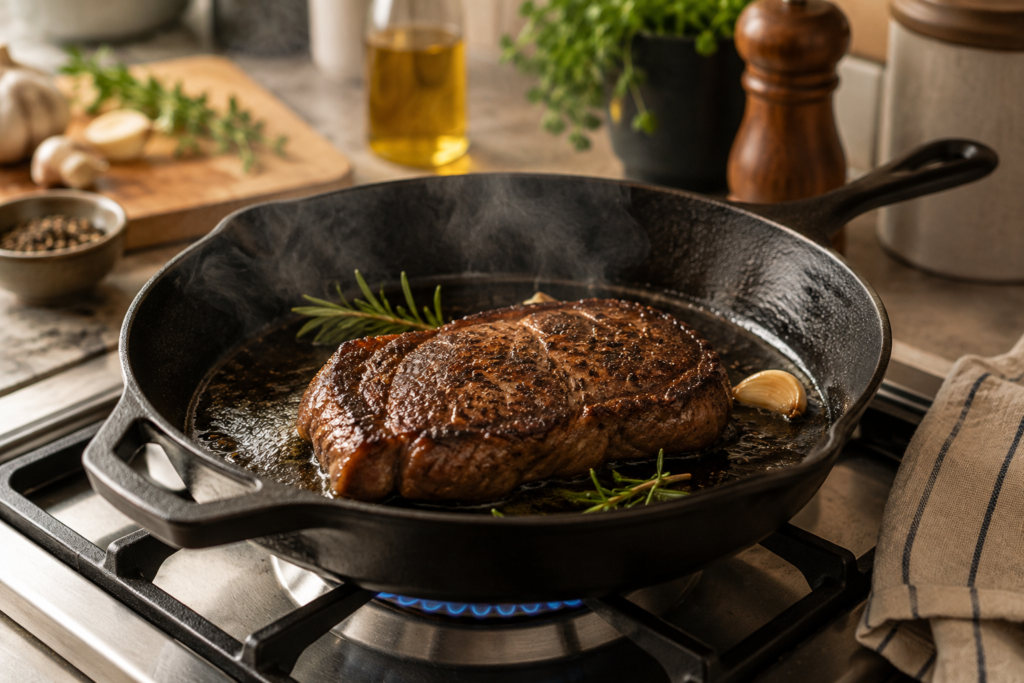
Cast iron frying pans are especially good for searing steaks, frying, roasting, and foods that benefit from steady, long-lasting heat. They’re a great choice for cooks who value durability and don’t mind a little extra maintenance
At a Glance
Choose stainless steel if you want a durable, versatile pan that can handle high heat and a wide variety of cooking techniques.
Choose nonstick if easy cooking and cleanup are your priorities, especially for eggs, pancakes, fish, and other delicate foods.
Choose cast iron if you want excellent heat retention, powerful searing, and a pan that can potentially last for generations.
There isn’t one frying pan that’s best for everyone. The right choice depends on what you cook most often, how much maintenance you’re comfortable with, and how you like to cook.
Which Frying Pan Is Best for You?
Choosing between stainless steel, nonstick, and cast iron ultimately comes down to how you cook.
Stainless steel is a great all-around choice for durability, versatility, and high-heat cooking. Nonstick is ideal for easy everyday cooking and delicate foods, while cast iron is hard to beat for heat retention, searing, and long-term durability.
For many home cooks, the best solution may actually be to own more than one type. A stainless steel pan for everyday cooking, a nonstick pan for eggs and pancakes, and a cast iron skillet for steaks and high-heat cooking can cover almost every need in the kitchen.
No matter which one you choose, the best frying pan is the one that fits your cooking habits, your favorite foods, and the amount of maintenance you’re comfortable with.
Frequently Asked Questions
1. Which frying pan is best for everyday cooking?
Stainless steel is one of the best choices for everyday cooking because it is durable, versatile, and suitable for many cooking methods. However, a nonstick pan may be more convenient for delicate foods such as eggs, pancakes, and fish.
2. Is stainless steel better than nonstick?
Stainless steel is better for high-heat cooking, searing, browning, and long-term durability. Nonstick is better for delicate foods and easy cleanup. The better choice depends on what you cook most often and how much maintenance you prefer.
3. Which frying pan is best for eggs?
Nonstick frying pans are usually the best choice for eggs because their smooth cooking surface helps prevent sticking and requires less oil or butter. Stainless steel and well-seasoned cast iron can also cook eggs successfully, but they require better temperature control and technique.
4. Is cast iron better than stainless steel?
Neither is better for every situation. Cast iron offers excellent heat retention and is ideal for searing steaks and other high-heat cooking. Stainless steel is lighter, easier to maintain, and more versatile for everyday cooking. The best choice depends on your cooking style and preferences.
5. Which type of frying pan lasts the longest?
Cast iron can last for decades or even generations when properly maintained. High-quality stainless steel pans can also last for many years. Nonstick pans generally have a shorter lifespan because the coating gradually wears over time.
6. Can I use stainless steel, nonstick, and cast iron on an induction cooktop?
Many stainless steel and cast iron pans work well on induction cooktops. Nonstick pans can also be induction-compatible if they have a magnetic base. Always check the manufacturer’s product information before using a pan on an induction cooktop.