Introduction
Cast iron frying pans have been a kitchen favorite for generations because of their durability, excellent heat retention, and versatility. From searing steaks to frying eggs and baking cornbread, a well-seasoned cast iron pan can handle many different cooking tasks.
However, cast iron is heavier than many other types of cookware and requires a little extra care to prevent rust and maintain its seasoning. Understanding its advantages and disadvantages can help you decide whether a cast iron frying pan is the right choice for your kitchen.
What Is a Cast Iron Frying Pan?
A cast iron frying pan is a heavy-duty pan made from cast iron, a material known for its durability and excellent heat retention. Once heated, it stays hot for a long time and distributes steady heat across the cooking surface.
Cast iron pans are especially popular for searing, frying, roasting, and even baking. With proper seasoning and care, the cooking surface can develop a naturally smooth, easy-release finish that improves over time.
Pros of Cast Iron Frying Pans
Cast iron frying pans offer several advantages that make them a favorite for many home cooks.
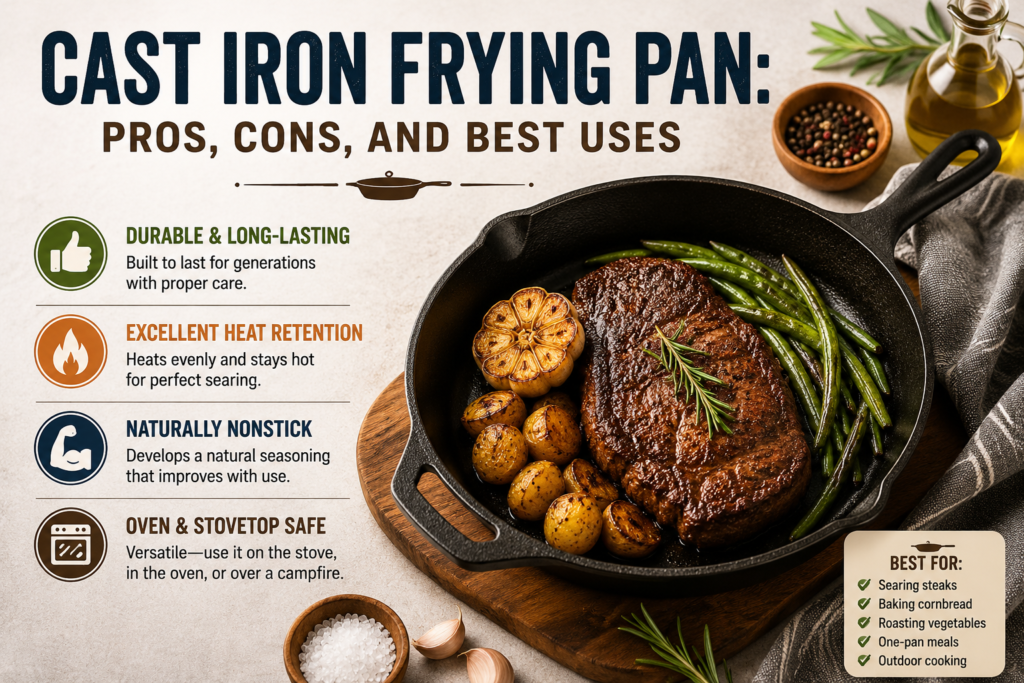
• Excellent heat retention – Cast iron stays hot for a long time, making it ideal for consistent cooking.
• Great for searing – High heat helps create a deep, flavorful crust on steaks and other meats.
• Extremely durable – With proper care, a cast iron pan can last for decades.
• Versatile – It can be used on the stovetop, in the oven, on a grill, and even over a campfire.
• Naturally improves with use – Regular seasoning helps develop a smoother, easier-release cooking surface over time.
Cons of Cast Iron Frying Pans
Cast iron frying pans are durable and versatile, but they also have a few disadvantages to consider.
• Heavy – Cast iron pans are much heavier than most stainless steel or nonstick pans.
• Requires seasoning – Regular seasoning helps protect the surface and maintain its easy-release finish.
• Can rust – If the pan is left wet or stored improperly, rust can develop.
• Takes longer to heat – Cast iron usually heats more slowly than lighter cookware.
• Requires careful cleaning – Harsh detergents, soaking, and improper drying can damage the seasoning or encourage rust.
Best Uses for a Cast Iron Frying Pan
Cast iron frying pans are especially useful for cooking methods that benefit from high, steady heat.
• Searing steaks – Excellent for developing a deep, flavorful crust.
• Frying – Great for fried chicken, potatoes, and other foods that need consistent heat.
• Roasting vegetables – Cast iron works well in the oven for beautifully browned vegetables.
• Baking – Perfect for cornbread, biscuits, skillet cookies, and other baked dishes.
• One-pan meals – You can start cooking on the stovetop and finish the dish in the oven.
• Outdoor cooking – Cast iron is well suited for grills and campfires.
How to Care for a Cast Iron Frying Pan
Proper care can help a cast iron frying pan last for generations and maintain a smooth, well-seasoned cooking surface.
• Dry it thoroughly – Never leave cast iron wet, as moisture can cause rust.
• Season regularly – Apply a very thin layer of cooking oil after cleaning to help protect the surface.
• Avoid soaking – Do not leave the pan sitting in water for long periods.
• Clean it gently – Use warm water and a brush or non-abrasive scrubber to remove food residue.
• Heat after washing – Briefly warming the pan on the stovetop helps remove any remaining moisture.
• Store it in a dry place – Good airflow and a dry storage area help prevent rust.
Frequently Asked Questions (FAQ)
1. Do cast iron frying pans need to be seasoned?
Yes. Seasoning helps protect cast iron from rust and creates a smoother cooking surface. Many new cast iron pans come pre-seasoned, but regular use and occasional additional seasoning can help maintain and improve the surface over time.
2. Can you use soap on a cast iron frying pan?
Yes. A small amount of mild dish soap can be used to clean modern cast iron cookware. Avoid soaking the pan or using harsh abrasive cleaners, and always dry it thoroughly after washing to help prevent rust.
3. Can you cook acidic foods in a cast iron frying pan?
Yes, but it is best to be careful with long cooking times. Highly acidic foods such as tomato sauce, vinegar-based dishes, or citrus can react with the iron and may weaken the seasoning, especially on a newer pan. A well-seasoned cast iron pan can usually handle short cooking times with acidic ingredients.
4. Can a cast iron frying pan go in the oven?
Yes. Cast iron frying pans are excellent for oven cooking because they can handle high temperatures. However, always check whether the handle, lid, or any additional parts have specific temperature limits before placing the pan in the oven.
5. How long can a cast iron frying pan last?
With proper care, a cast iron frying pan can last for decades and even be passed down through generations. Regular seasoning, thorough drying, and proper storage can help prevent rust and keep the pan in excellent condition for many years
6. Can you still use a cast iron frying pan if it has rust?
Yes. In most cases, a rusty cast iron frying pan can be restored and used again. Light surface rust can usually be scrubbed away with steel wool or a stiff brush. After removing the rust, wash and thoroughly dry the pan, then apply a thin layer of cooking oil and re-season it. If the pan has severe rust, deep pitting, or cracks, inspect it carefully before continuing to use it.
Conclusion
Cast iron frying pans are durable, versatile, and excellent at retaining heat. They are especially useful for searing steaks, frying, roasting vegetables, baking, and cooking meals that move from the stovetop to the oven.
Although cast iron requires more care than nonstick or stainless steel cookware, proper cleaning, thorough drying, and regular seasoning can keep a pan in excellent condition for decades. Even surface rust can often be removed and the pan restored with proper care.
For home cooks who do not mind the extra weight and maintenance, a cast iron frying pan can be a reliable and long-lasting addition to the kitchen.
Looking for an easier everyday option? Read our guide: Nonstick Frying Pan: Pros, Cons, and Best Uses.