Introduction
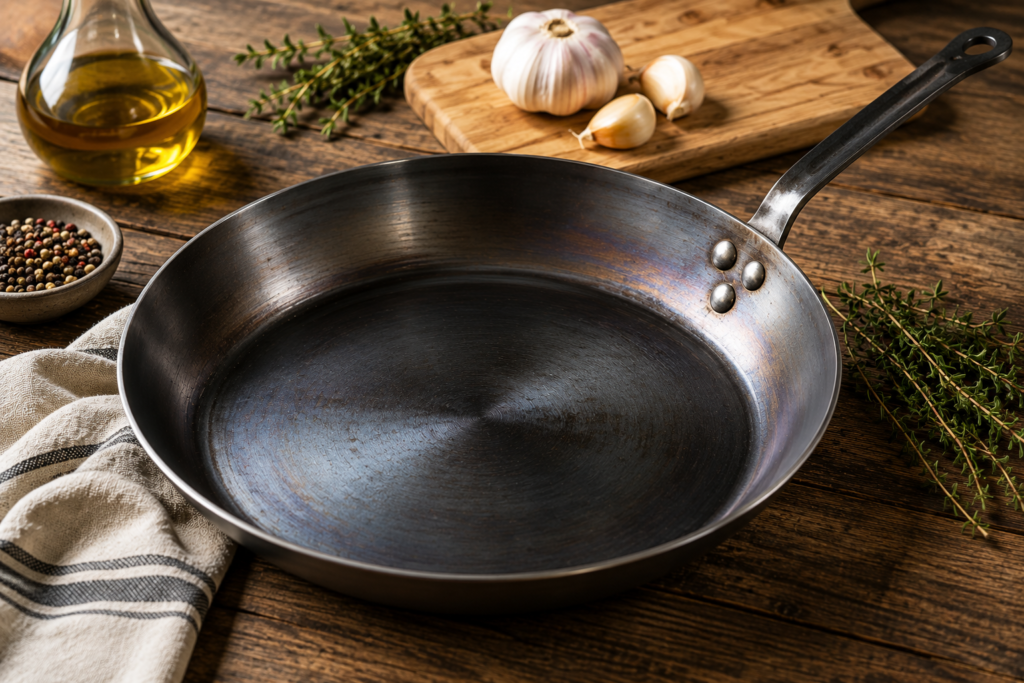
Carbon steel frying pans are popular with both home cooks and professional chefs because they heat quickly, handle high temperatures, and can last for many years. With proper seasoning, the cooking surface gradually becomes smoother and more naturally nonstick.
Carbon steel is often compared with cast iron because both require seasoning and proper care. However, carbon steel pans are generally lighter and respond more quickly to changes in heat, making them versatile for everyday cooking.
In this guide, we’ll look at the pros and cons of carbon steel frying pans, their best uses, and the basic care they need to stay in good condition.
What Is a Carbon Steel Frying Pan?
Carbon steel frying pans are made primarily from iron and a small amount of carbon. They are thinner and lighter than most cast iron pans, allowing them to heat up and cool down more quickly.
Unlike traditional nonstick pans, carbon steel pans do not rely on a synthetic nonstick coating. Instead, regular seasoning with a thin layer of oil creates a protective surface that becomes smoother and more naturally nonstick over time.
Because carbon steel can handle high temperatures, it is popular for searing, frying, sautéing, and many other cooking methods
Pros of Carbon Steel Frying Pans
Carbon steel frying pans offer several advantages that make them popular with both home cooks and professional chefs.
- Heats up quickly: Carbon steel responds to temperature changes faster than cast iron.
- Excellent for high-heat cooking: It works especially well for searing steaks, browning meat, and stir-frying.
- Lightweight compared with cast iron: It is generally easier to lift and move around the kitchen.
- Naturally nonstick with seasoning: With regular seasoning and use, the cooking surface becomes smoother and more naturally nonstick.
- Very durable: With proper care, a good carbon steel pan can last for many years.
Cons of Carbon Steel Frying Pans
Carbon steel frying pans are versatile and durable, but they also require more care than some other types of cookware.
- Requires seasoning: The pan needs regular seasoning to maintain its cooking surface and help prevent rust.
- Can rust: If the pan is left wet or stored while damp, rust can develop.
- Not ideal for acidic foods: Tomatoes, vinegar, and other acidic ingredients can damage the seasoning, especially on a newer pan.
- Requires hand washing: Carbon steel pans should generally not be cleaned in a dishwasher.
- Handle can become hot: Depending on the pan, the handle may become very hot during cooking.
Best Uses for a Carbon Steel Frying Pan
Carbon steel frying pans are especially useful for cooking methods that require quick temperature changes and high heat.
- Searing steaks: Excellent for creating a deep, flavorful crust.
- Stir-frying: The pan heats quickly and works well for vegetables, meat, and noodles.
- Sautéing vegetables: Great for quickly browning vegetables while keeping them crisp.
- Cooking eggs: Once the pan is well seasoned, it can work very well for fried eggs and omelets.
- Browning meat: High heat makes carbon steel a good choice for chicken, pork, and other meats.
- Stovetop-to-oven cooking: Many carbon steel pans can move directly from the stovetop to the oven.
How to Care for a Carbon Steel Frying Pan
Proper care helps protect a carbon steel frying pan from rust and allows its seasoned cooking surface to improve over time.
- Dry it thoroughly: Never leave the pan wet after washing, as moisture can cause rust.
- Season it regularly: Apply a very thin layer of cooking oil to help maintain the protective seasoning.
- Avoid soaking: Do not leave carbon steel sitting in water for long periods.
- Clean it gently: Use warm water and a soft brush or non-abrasive scrubber to remove food residue.
- Avoid the dishwasher: Dishwasher detergents and prolonged moisture can damage the seasoning and encourage rust.
- Store it dry: Make sure the pan is completely dry before putting it away.
Frequently Asked Questions
1. Does a carbon steel frying pan need to be seasoned?
Yes. Seasoning helps protect carbon steel from rust and creates a smoother, more naturally nonstick cooking surface. Some carbon steel pans come pre-seasoned, but regular use and occasional re-seasoning will help maintain and improve the surface over time.
2. Is carbon steel better than cast iron?
Carbon steel and cast iron are both excellent for high-heat cooking, but they have different advantages. Carbon steel is generally lighter and heats up and cools down faster, while cast iron is heavier and retains heat for longer. The better choice depends on your cooking style and personal preference.
3. Can you cook acidic foods in a carbon steel frying pan?
It is best to limit long cooking times with highly acidic foods such as tomatoes, vinegar, or citrus, especially when the pan is newly seasoned. Acidic ingredients can weaken or remove some of the seasoning. Once the seasoning is well established, brief contact with acidic foods is generally less of a concern.
4. Can a carbon steel frying pan go in the oven?
Yes. Many carbon steel frying pans are oven-safe and can handle high temperatures, making them useful for recipes that start on the stovetop and finish in the oven. However, always check the manufacturer’s instructions because handles or other components may have specific temperature limits.
5. How long does a carbon steel frying pan last?
With proper care, a carbon steel frying pan can last for decades. Regular seasoning, thorough drying, and proper storage help prevent rust and keep the cooking surface in good condition.
6. Can you still use a carbon steel frying pan if it gets rusty?
Yes. Light surface rust can usually be removed, and the pan can be restored. Scrub away the rust, wash and dry the pan thoroughly, and then re-season it with a thin layer of cooking oil. If the pan has severe corrosion, deep pitting, or structural damage, it should be carefully inspected before further use.
Conclusion
Carbon steel frying pans offer an excellent balance of durability, responsiveness, and high-heat cooking performance. They are especially useful for searing meat, stir-frying, sautéing vegetables, and other cooking methods that benefit from quick temperature changes.
Although carbon steel requires seasoning and a little more maintenance than traditional nonstick cookware, proper cleaning, thorough drying, and regular seasoning can help the pan develop a smooth cooking surface and last for decades.
For home cooks who want something lighter than cast iron but still capable of handling high heat, a carbon steel frying pan can be a versatile and long-lasting addition to the kitchen.
Prefer heavier cookware with excellent heat retention? Read our guide: Cast Iron Frying Pan: Pros, Cons, and Best Uses.