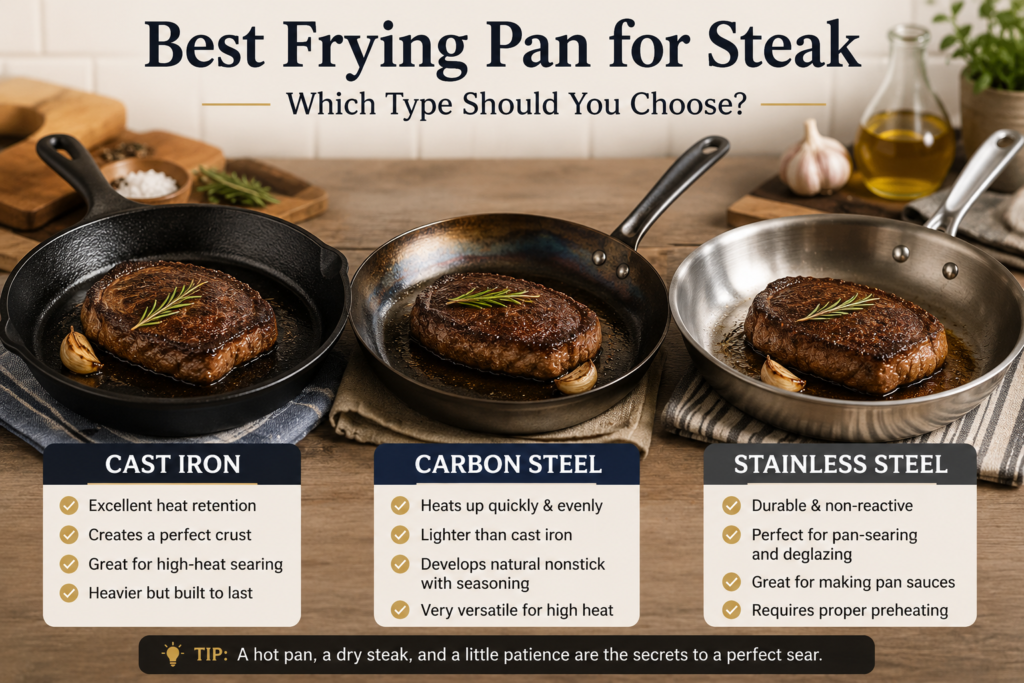
Cooking a great steak at home depends on more than the cut of meat. The frying pan you choose can affect how quickly the surface browns, how well the pan maintains heat, and how easy it is to create a flavorful crust.
Cast iron, carbon steel, and stainless steel are all excellent choices for pan-searing steak. Cast iron is known for excellent heat retention, carbon steel combines high-heat performance with lighter weight, and stainless steel is versatile and especially useful when you want to make a pan sauce after searing.
In this guide, we’ll compare these three frying pan types and help you decide which one is best for cooking steak at home.
Best Frying Pans for Steak: Quick Comparison
All three pans can produce an excellent steak, but each has different strengths.
| Feature | Cast Iron | Carbon Steel | Stainless Steel |
|---|---|---|---|
| Heat Retention | Excellent | Very Good | Very Good |
| Heating Speed | Slower | Faster | Moderate |
| High-Heat Searing | Excellent | Excellent | Excellent |
| Weight | Heavy | Medium | Medium |
| Seasoning Required | Yes | Yes | No |
| Pan Sauces | Good | Good | Excellent |
| Best For | Deep, steady searing | Fast, responsive searing | Searing and pan sauces |
Cast Iron Frying Pans for Steak
Cast iron is one of the most popular choices for searing steak because it retains heat extremely well. Once properly preheated, the pan remains hot when a steak is placed on its surface, helping develop a deeply browned crust.
Cast iron is also durable and can move from the stovetop to the oven when needed.
The main disadvantage is weight. Cast iron pans are considerably heavier than many other frying pans and also take longer to heat.
Carbon Steel Frying Pans for Steak
Carbon steel provides many of the high-heat cooking advantages of cast iron while generally being lighter and more responsive to temperature changes.
A properly seasoned carbon steel pan can develop a relatively smooth cooking surface and works very well for searing steak. Because it heats and cools more quickly than cast iron, it can also provide greater control when adjusting the burner during cooking.
Like cast iron, carbon steel requires seasoning and should be dried thoroughly after washing to help prevent rust.
Stainless Steel Frying Pans for Steak
Stainless steel is another excellent choice for cooking steak, particularly for cooks who want to make a pan sauce afterward.
When properly preheated, a quality stainless steel pan can produce strong browning and leave flavorful browned bits, known as fond, on the cooking surface. These can be deglazed with liquid to form the base of a pan sauce.
Stainless steel does not require seasoning and is resistant to rust, although proper preheating and cooking technique can help reduce sticking.
Which Pan Creates the Best Crust?
Cast iron is particularly well suited to developing a strong crust because of its excellent heat retention. Carbon steel can also produce excellent browning while providing quicker temperature response.
Stainless steel is highly capable of searing steak as well and has the added advantage of making it easy to use the browned fond for sauces.
The quality of the crust also depends on factors beyond the pan itself, including surface moisture, pan temperature, and cooking technique.
What Size Frying Pan Is Best for Steak?
The pan should be large enough to hold the steak comfortably without crowding.
For one steak, a medium-sized skillet may provide sufficient room. If cooking two or more steaks, a larger pan may be necessary so that each steak has good contact with the hot cooking surface.
Crowding the pan can trap moisture and interfere with browning, so leaving some space around the meat is helpful.
Tips for Getting a Better Sear
- Pat the surface of the steak dry before cooking.
- Preheat the pan before adding the steak.
- Use a cooking fat suitable for the temperature you are using.
- Avoid overcrowding the pan.
- Give the steak time to develop a crust before moving it.
- Use a food thermometer rather than relying only on color to judge safe doneness.
For food safety, USDA guidance says whole beef steaks should reach at least 145°F (62.8°C) internally and rest for at least 3 minutes before eating.
Which Frying Pan Is Best for You?
Choose cast iron if excellent heat retention and a strong sear are your main priorities and you do not mind using a heavier pan.
Choose carbon steel if you want excellent high-heat performance in a pan that is generally lighter and more responsive than cast iron.
Choose stainless steel if you want a versatile, low-maintenance pan that can sear steak well and is particularly convenient for making pan sauces afterward.
For many home cooks, cast iron is an excellent choice for straightforward steak searing, but all three can produce excellent results when used properly.
Frequently Asked Questions
1. Is cast iron or carbon steel better for steak?
Both are excellent choices. Cast iron retains heat exceptionally well, while carbon steel is generally lighter and responds more quickly to temperature changes. The better choice depends on whether you prioritize maximum heat retention or easier handling and responsiveness.
2. Is stainless steel good for cooking steak?
Yes. Stainless steel can produce excellent browning when properly preheated. It is particularly useful if you plan to deglaze the pan and make a sauce from the browned bits left after searing.
3. Should I use a nonstick frying pan for steak?
A conventional coated nonstick pan is generally not the first choice for high-heat steak searing. Cast iron, carbon steel, or stainless steel is usually better suited to the strong searing temperatures used to develop a crust.
4. Why does my steak stick to a stainless steel pan?
Steak may initially stick to stainless steel while browning. Proper preheating, using an appropriate amount of cooking fat, and allowing the crust to develop before attempting to move the steak can make release easier.
5. Do I need to season a pan before cooking steak?
Cast iron and carbon steel benefit from seasoning, which helps protect their surfaces and improves cooking performance over time. Stainless steel does not require seasoning.
6. What is the safest internal temperature for steak?
USDA recommends cooking whole beef steaks to a minimum internal temperature of 145°F (62.8°C) measured with a food thermometer, followed by a rest of at least 3 minutes.
Conclusion
Cast iron, carbon steel, and stainless steel can all be excellent frying pans for cooking steak.
Cast iron stands out for exceptional heat retention and powerful searing. Carbon steel offers similar high-heat capability in a generally lighter and more responsive pan. Stainless steel combines excellent searing performance with easy maintenance and is particularly useful for making pan sauces.
The best choice depends on your cooking style. If maximum heat retention is your priority, choose cast iron. If you prefer quicker temperature response and lighter handling, consider carbon steel. If versatility and pan sauces are important, stainless steel is an excellent option.
Whichever pan you choose, proper preheating, a dry steak surface, and careful temperature control can help you achieve better results.
Related Frying Pan Guides
Cast Iron Frying Pan: Pros, Cons, and Best Uses