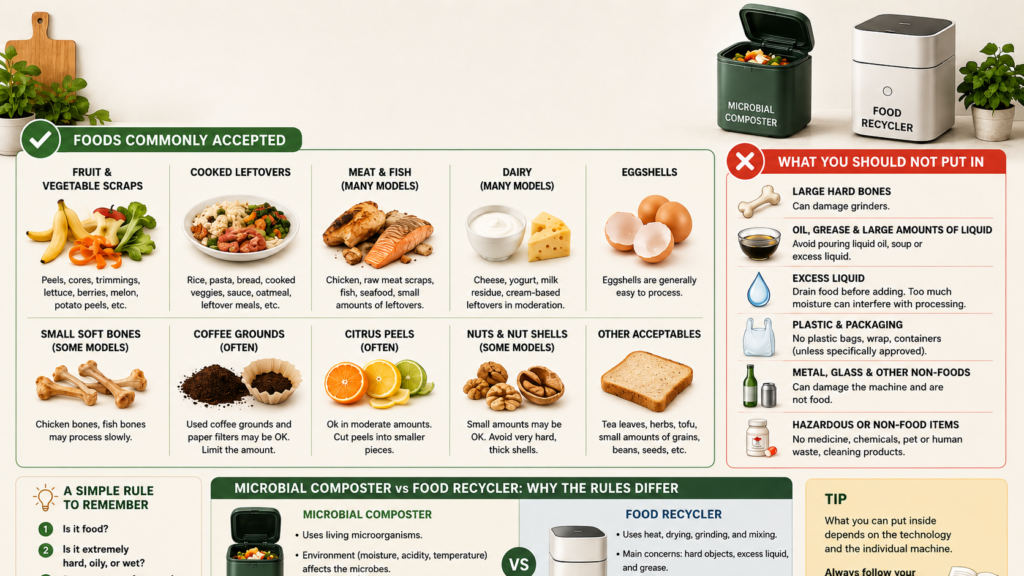
Introduction
One of the biggest advantages of a countertop composter or food recycler is being able to deal with food scraps right in the kitchen.
But what can you actually put inside?
Can it handle meat, fish, dairy, bones, coffee grounds, citrus peels, or leftover cooked food?
The answer depends on the type and model you own. Microbial composters and food recyclers do not always accept the same materials, so the manufacturer’s instructions should always come first.
Here is a practical guide to the foods commonly accepted—and the ones that need extra caution.
Quick Guide
| Food or Material | Usually Accepted? | What to Know |
|---|---|---|
| Fruit & Vegetable Scraps | Yes | Cut large or fibrous pieces smaller |
| Cooked Leftovers | Usually | Avoid excessive liquid or oil |
| Meat & Fish | Many models | Check your specific machine |
| Dairy | Many models | Small amounts may work better |
| Eggshells | Usually | Generally easy to process |
| Small Soft Bones | Some models | May process slowly |
| Large Hard Bones | Usually No | Can damage grinders |
| Coffee Grounds | Often | Amount may need to be limited |
| Citrus Peels | Often | Microbial systems may need moderation |
| Oil & Grease | Usually No | Avoid pouring liquid oil into the machine |
| Large Amounts of Liquid | No | Drain food before adding |
| Plastic & Packaging | No | Unless the manufacturer specifically approves it |
1. Fruit and Vegetable Scraps
Fruit and vegetable scraps are among the easiest foods for most countertop composters and food recyclers to handle.
Examples include:
- Apple cores
- Banana peels
- Carrot peels
- Vegetable trimmings
- Lettuce
- Berries
- Melon
- Potato peels
- Broccoli stems
Very large, tough, or fibrous pieces may process better if you cut them into smaller pieces first.
What About Citrus Peels?
Orange, lemon, lime, and grapefruit peels may be accepted, but microbial systems can be more sensitive to large quantities.
Thick citrus peels also break down more slowly.
If you use a microbial composter, adding citrus in moderate amounts and cutting the peels into smaller pieces can make processing easier.
2. Can You Put Meat and Fish in a Countertop Composter?
Many modern countertop systems can handle meat and fish—but not all of them.
This is one major difference between an indoor electric system and a traditional backyard compost pile.
Depending on the machine, accepted foods may include:
- Cooked chicken
- Raw meat scraps
- Fish
- Seafood
- Small amounts of leftover meat
- Fish skin
Always check the manufacturer’s list first because limits can vary.
For microbial systems, very large quantities of meat may take longer to break down.
For food recyclers, extremely hard bones or shells may damage the grinding mechanism.
3. Can You Put Dairy Products Inside?
Many countertop food-waste appliances can process dairy products such as:
- Cheese
- Yogurt
- Milk residue
- Cream-based leftovers
However, large amounts of liquid dairy should generally be avoided.
Too much liquid can make the contents overly wet, greasy, or difficult to process.
If you are adding leftover food covered in sauce or dairy, drain off excessive liquid first.
4. What About Bones?
Bones require more caution.
Small or Soft Bones
Some machines can process small bones such as:
- Chicken bones
- Fish bones
Microbial systems may take longer to break them down, while some food recyclers may grind smaller bones.
Large or Hard Bones
Large beef, pork, or lamb bones generally should not be placed in a countertop food recycler unless the manufacturer specifically says they are acceptable.
Hard bones can damage grinding components.
The same caution applies to very hard shells such as thick nut shells and some seafood shells.
5. Can You Add Eggshells?
Yes, eggshells are accepted by many countertop composters and food recyclers.
They are relatively easy to add along with other kitchen scraps.
Breaking large shell pieces into smaller pieces can help them mix more evenly with the rest of the food waste.
6. Can You Put Coffee Grounds in a Countertop Composter?
Coffee grounds are accepted by many systems, but this is another area where the type of machine matters.
Food recyclers may handle used coffee grounds and, in some cases, paper coffee filters.
Microbial systems may recommend limiting the amount of coffee grounds because excessive quantities can affect the environment where the microorganisms live.
So rather than emptying a large amount of coffee into the machine at once, follow the recommended amount for your particular model.
7. Can You Add Cooked Leftovers?
Usually, yes.
Many countertop food-waste appliances are designed specifically for the scraps that come from everyday meals.
Examples include:
- Rice
- Pasta
- Bread
- Cooked vegetables
- Small amounts of sauce
- Leftover meat
- Cereal
- Oatmeal
But balance is important.
Large quantities of one type of food—especially very sugary, starchy, oily, or wet foods—can make processing more difficult.
A mixture of different food scraps generally works better.
8. What About Oil, Grease, and Liquids?
Avoid pouring cooking oil, grease, soup, or large amounts of liquid directly into a countertop composter or food recycler.
A small amount of sauce or oil left on food is very different from pouring liquid oil into the machine.
Before adding very wet leftovers:
- Drain excess liquid.
- Remove large amounts of grease.
- Avoid filling the bucket with soup or beverages.
Too much moisture can interfere with processing, particularly in microbial systems.
What Should You Not Put in a Countertop Composter?
Although instructions vary by model, these items commonly require avoidance:
- Large hard bones
- Very hard shells
- Large amounts of cooking oil or grease
- Large amounts of liquid
- Plastic bags
- Plastic wrap
- Conventional plastic containers
- Metal
- Glass
- Medicine
- Pet or human waste
- Household chemicals
- Cleaning products
Do not assume something is safe simply because it is labeled biodegradable or compostable.
Some countertop machines do not accept compostable plastics or packaging at all.
Microbial Composter vs Food Recycler: Why the Rules Differ
A microbial composter contains living microorganisms.
That means the foods you add can affect moisture, acidity, temperature, and the health of the microbial environment.
Too much liquid, oil, citrus, or certain other foods may interfere with that balance.
A food recycler, on the other hand, typically dries and grinds food waste.
Its biggest limitations may involve materials that can damage the grinder, create excessive moisture, or interfere with the drying process.
This is why one machine may accept something that another does not.
A Simple Rule to Remember
Before putting something new into your machine, ask:
1. Is it food?
2. Is it extremely hard, oily, or wet?
3. Does my manufacturer’s guide specifically allow it?
If you are unsure about the third question, check the manual before adding it.
That is especially important for:
- Bones
- Shells
- Citrus
- Coffee grounds
- Oils
- Compostable packaging
Conclusion
Countertop composters and food recyclers can handle a surprisingly wide variety of everyday kitchen scraps.
Fruit and vegetable scraps, cooked leftovers, eggshells, and many other common foods are accepted by most systems. Many modern machines can even process meat, fish, and dairy.
But what you can put inside depends on the technology and the individual machine.
Microbial composters need a healthy environment for their microorganisms, while food recyclers must protect their grinders and drying systems from hard objects, excessive liquid, and grease.
The simplest and safest approach is to use the manufacturer’s accepted-food list as your final guide.
More in Our Countertop Composter Series
- Types of Countertop Food Composters: Microbial Composter vs Food Recycler
- What Can You Put in a Countertop Composter? ← You are here
- Are Countertop Composters Worth It? Pros, Cons, Odor, Cost & Maintenance