Introduction
For many years, I thought of a blender as a pretty simple kitchen appliance. You put something in, blend it until smooth, and that was about it.
In my own home, one of the most common uses has always been drinks. My kids often use a blender for protein shakes or banana milk, so seeing a blender running in the kitchen is nothing unusual for me.
But I recently started wondering: What else can you actually make with a blender?
I tend to keep kitchen appliances for a long time and use what I already know rather than constantly trying the newest products. So when I started looking at today’s blenders—including small personal blenders, high-powered models, and all the different settings—I realized there were many everyday uses I had never really thought about.
Here are some of the most practical things a blender can do in an ordinary home kitchen.
Smoothies and Protein Shakes
This is probably the most familiar use, and it is certainly one of the most common in our house.
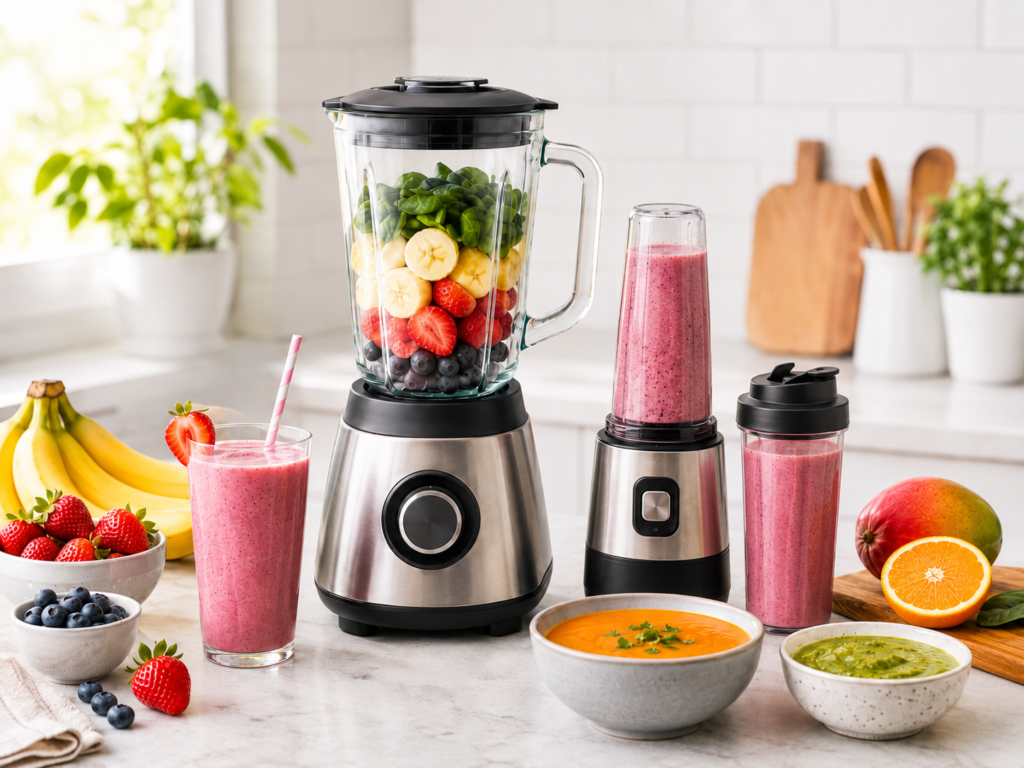
A blender makes it easy to combine fruit, milk, yogurt, ice, protein powder, nut butter, or other ingredients into one smooth drink.
My kids often make protein shakes, and banana milk is another simple favorite. These kinds of drinks are one reason a blender gets used regularly rather than sitting forgotten in a cabinet.
If smoothies or shakes are something your family makes often, a blender can easily become an everyday appliance.
Personal Drinks in a Small Blender
One thing I find especially practical today is the small personal blender.
Some models let you blend directly in the same container you drink from. After blending, you simply change the blade attachment for a drinking lid.
That may not sound like a big difference, but for one person making a quick smoothie or shake, it can be much more convenient than pulling out a large blender.
It also means fewer dishes to wash.
For students, teenagers, or anyone who regularly makes just one serving, a small blender can sometimes make more sense than a full-size model.
Soups
Blenders can also turn cooked vegetables into smooth soups.
Cooked squash, carrots, potatoes, tomatoes, onions, or other vegetables can be blended into a creamy texture.
One important thing to remember is that not every blender is designed for very hot liquids. Some manufacturers recommend allowing food to cool first, while certain models are specifically designed to handle hot ingredients.
Always check the instructions for your particular blender before blending hot soup.
Sauces and Dressings
A blender can be very useful for homemade sauces and dressings.
Instead of whisking everything by hand, you can blend ingredients until they become smooth and evenly combined.
This can work well for salad dressings, marinades, simple tomato sauces, creamy sauces, and similar mixtures.
For me, this is one of those uses that is easy to overlook because I used to think of the blender mainly as a drink maker.
Pancake and Crepe Batter
Some batters can also be mixed in a blender.
Ingredients such as milk, eggs, flour, and melted butter can be blended together quickly for pancakes or crepes.
It can be convenient, but you still need to be careful not to blend certain batters too much. Overmixing can affect the final texture.
So while a blender can save time, faster does not always mean you should blend longer.
Purees
Blenders are especially good at making foods smooth.
Cooked fruits and vegetables can be turned into purees for sauces, soups, baby food, or other recipes.
This is really where a blender is strongest: when you want the final texture to be smooth and consistent.
And that distinction helped me understand something important about the difference between a blender and a food processor.
What a Blender Is Not Always Good At
A blender can do many things, but that does not mean it should replace every other kitchen appliance.
For example, when I prepare garlic or vegetables for cooking, I often don’t want them completely smooth. I may want them chopped into small pieces while still keeping some texture.
That is where I prefer a food processor.
A blender tends to pull ingredients toward the blades and turn them into a smoother mixture. A food processor is often better for chopping, slicing, shredding, or creating a coarser texture.
If I want something smooth, I think blender. If I want to keep some texture, I am more likely to reach for the food processor.
That simple difference is one reason I personally like having both.
Do You Need an Expensive Blender?
Not necessarily.
This is something I think about whenever I see the large selection of blenders in stores today.
There are powerful—and sometimes very expensive—models with many settings and features. But if you mainly make banana milk, protein shakes, simple smoothies, or sauces, you may not need all of them.
Before replacing a blender that already works, I think it makes sense to ask:
What do I actually make with it?
How often will I use it?
Do I need a large blender, or would a small personal blender be enough?
That is the kind of question I am learning to ask more often with kitchen appliances.
Newer does not automatically mean better for every kitchen.
FAQ
Can you use a blender every day?
Yes. A blender can be used daily for things such as smoothies, protein shakes, sauces, dressings, and other blended foods, as long as the appliance is used according to the manufacturer’s instructions.
Can a blender replace a food processor?
Sometimes their jobs overlap, but not completely. Blenders are generally better when you want a smooth or liquid result, while food processors are often better for chopping and maintaining more texture.
Is a personal blender worth having?
It can be, especially if you usually make one serving at a time. A personal blender can be convenient for smoothies and protein shakes because many models allow you to blend and drink from the same container.
Can you put hot food in a blender?
It depends on the blender. Some models can handle hot ingredients while others cannot. Always check the manufacturer’s instructions before blending hot liquids.
Conclusion
I used to think a blender was mostly for making drinks.
And in our house, protein shakes and banana milk are still some of the things we make most often.
But once I started paying more attention, I realized a blender can also be useful for soups, sauces, dressings, purees, and even some batters.
At the same time, I don’t think every new blender feature is something everyone needs.
The best blender is really the one that matches the way you actually cook and eat.
For me, learning what a blender can—and cannot—do has also helped me understand why having both a blender and a food processor can make sense.
Sometimes, even after using kitchen appliances for many years, simply asking, “What else can this do?” can teach you something new.
More in Our Blender & Food Processor Series
- Blender vs Food Processor: What’s the Difference and Do You Need Both?
- What Can You Make With a Blender? Easy Everyday Uses
- What Can You Make With a Food Processor? Chopping, Slicing and More
- Best Small Kitchen Appliances for College Dorms