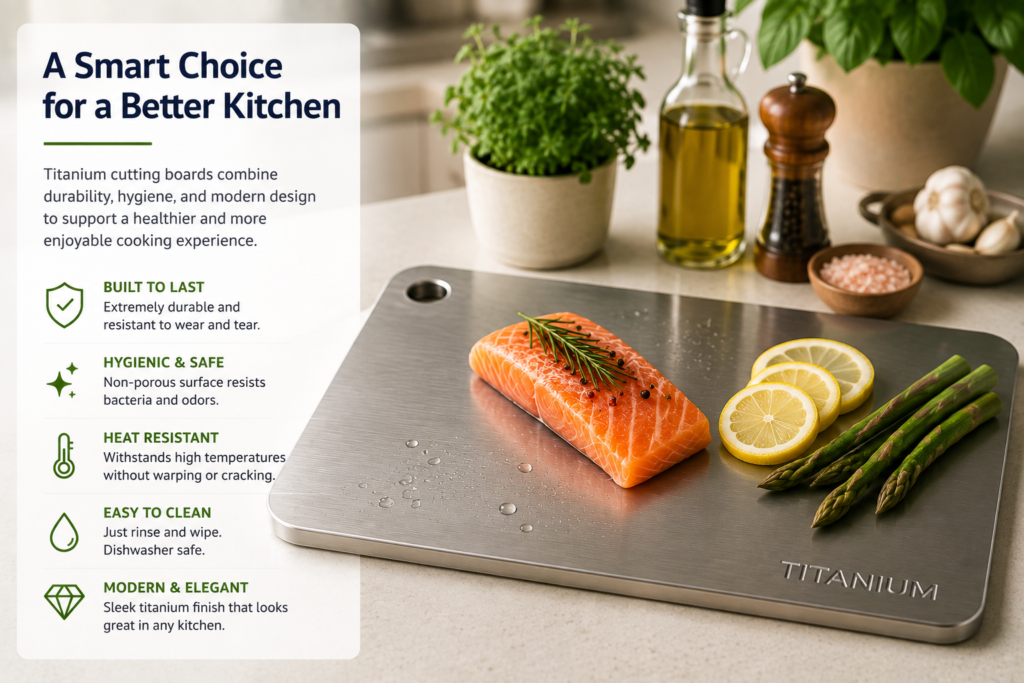
Titanium cutting boards have become increasingly popular among home cooks and professional chefs. Many people are attracted by their durability, modern appearance, and claims of superior hygiene. But are they really worth the investment? In this guide, we’ll explore the pros, cons, and key factors to help you decide whether a titanium cutting board is the right choice for your kitchen.
What Is a Titanium Cutting Board?
A titanium cutting board is made from food-grade titanium or a titanium-coated metal surface. Unlike traditional wooden or plastic cutting boards, it is designed to resist stains, odors, rust, and bacterial growth. While these boards are extremely durable, they also have unique characteristics that every home cook should understand before buying one.
Pros of Titanium Cutting Boards
Titanium cutting boards offer several distinct advantages. They are highly resistant to corrosion, do not absorb odors or stains, and are exceptionally easy to sanitize.
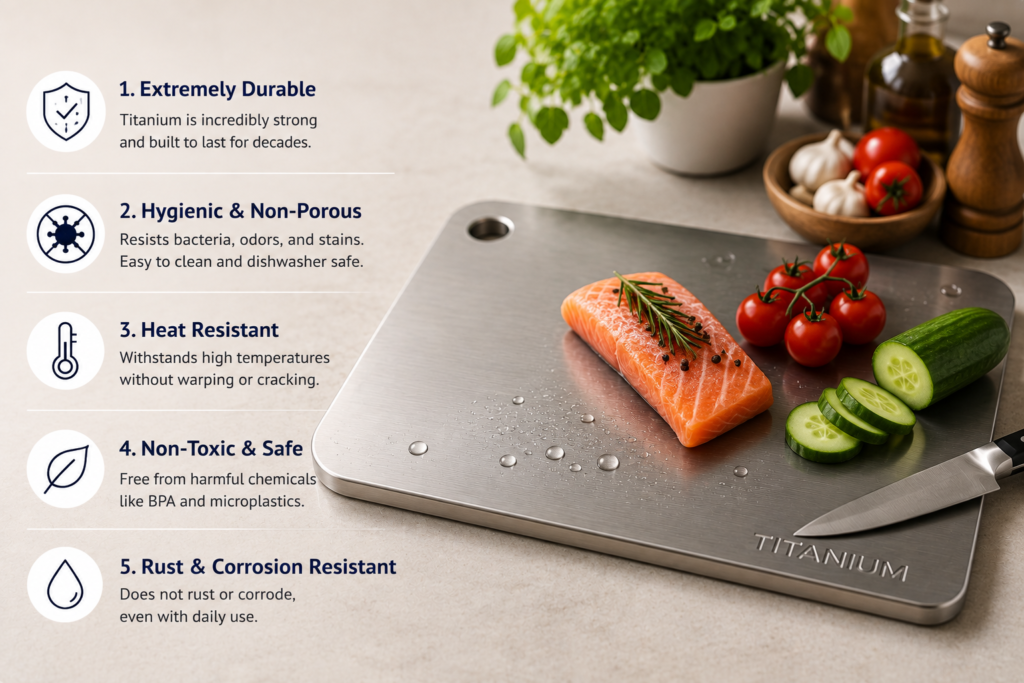
My Honest Take: While they are undeniably hygienic for raw meats and seafood, keep in mind that the metallic surface feels very different from traditional materials. If you despise lingering food smells or garlic odors on plastic, this material solves that problem completely.
Cons of Titanium Cutting Boards
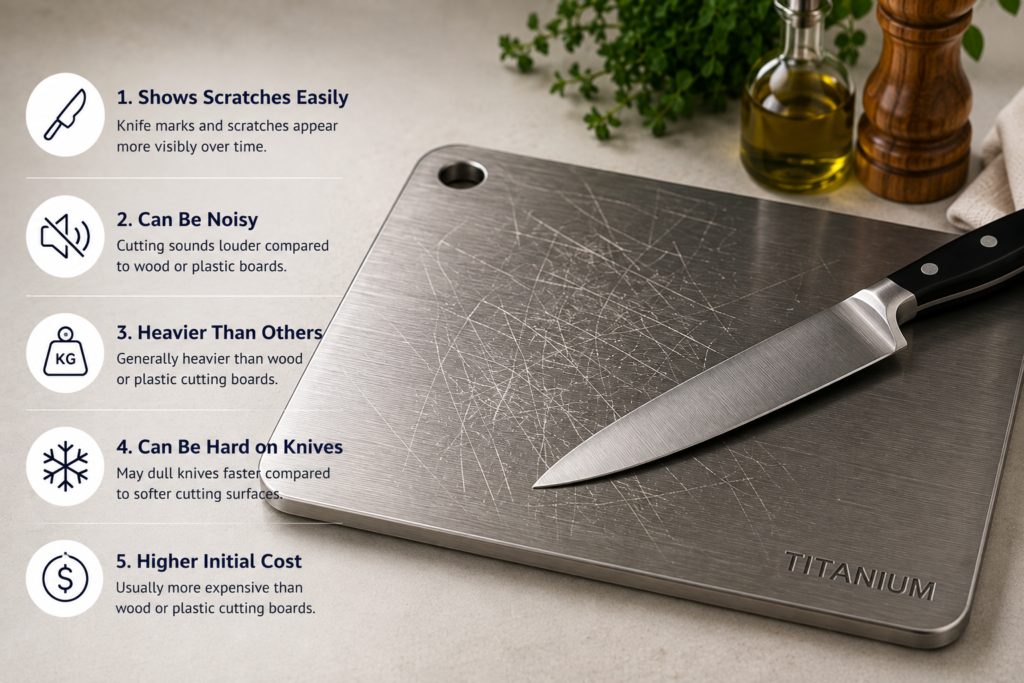
Despite their sleek look and hygienic benefits, titanium cutting boards have noticeable drawbacks that every home cook should consider.
- Knife Dullness: Because metal is much harder than wood or plastic, cutting directly on titanium will dull your chef’s knife edges much faster. You will need to sharpen your knives more frequently.
- Cutting Noise: The impact of a steel knife on a titanium surface creates a high-pitched clicking or scraping sound, which some home cooks find uncomfortable during daily prep.
- Why I Prefer Silicone: After testing various surfaces over my 30 years in the kitchen, I personally stick with flexible silicone boards for daily chopping. Silicone provides the same effortless hygiene and dishwasher-safe convenience without destroying my knife edges or making harsh noises.
Who Should Buy a Titanium Cutting Board?
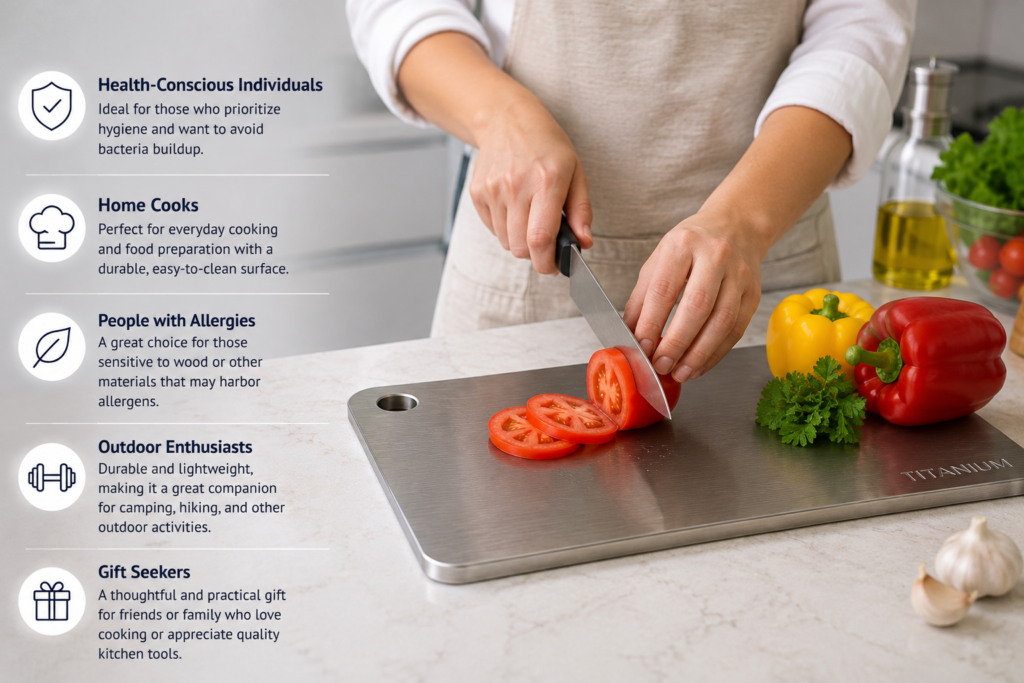
Titanium cutting boards are best suited for people who prioritize hygiene, durability, and low maintenance. If you frequently prepare raw meat or seafood and want a cutting board that is easy to sanitize, titanium can be an excellent choice. However, if protecting your knives is your highest priority, a wooden cutting board may be a better option.
Frequently Asked Questions
Do titanium cutting boards damage knives?
Yes. Titanium is significantly harder than wood or soft plastic. Regular chopping on a metal surface will roll or dull fine knife edges much faster, requiring more frequent honing and sharpening.
Are titanium cutting boards truly hygienic?
Yes. Titanium is non-porous and resistant to deep knife grooves where bacteria usually breed. It washes clean easily with hot water and dish soap, making it highly stain- and odor-resistant.
Is a titanium cutting board worth the price?
It depends on your priorities. If maximum hygiene and lifetime durability are your top goals, it can be a solid choice. However, if you value preserving your sharp kitchen knives and prefer quiet meal prep, traditional wood or quality silicone boards offer a better daily cooking experience.
Conclusion
Titanium cutting boards offer outstanding durability, excellent resistance to odors, and a sleek modern look. While they are a great match for cooks who prioritize quick sanitization and low maintenance, the potential wear on knife edges and cutting noise are important trade-offs. Consider your daily prep habits and knife care routine before making the investment.