Introduction
Carbon steel and cast iron frying pans are both popular choices for cooks who want durable cookware that can handle high temperatures. Both can develop a naturally nonstick cooking surface with proper seasoning and can last for many years with the right care.
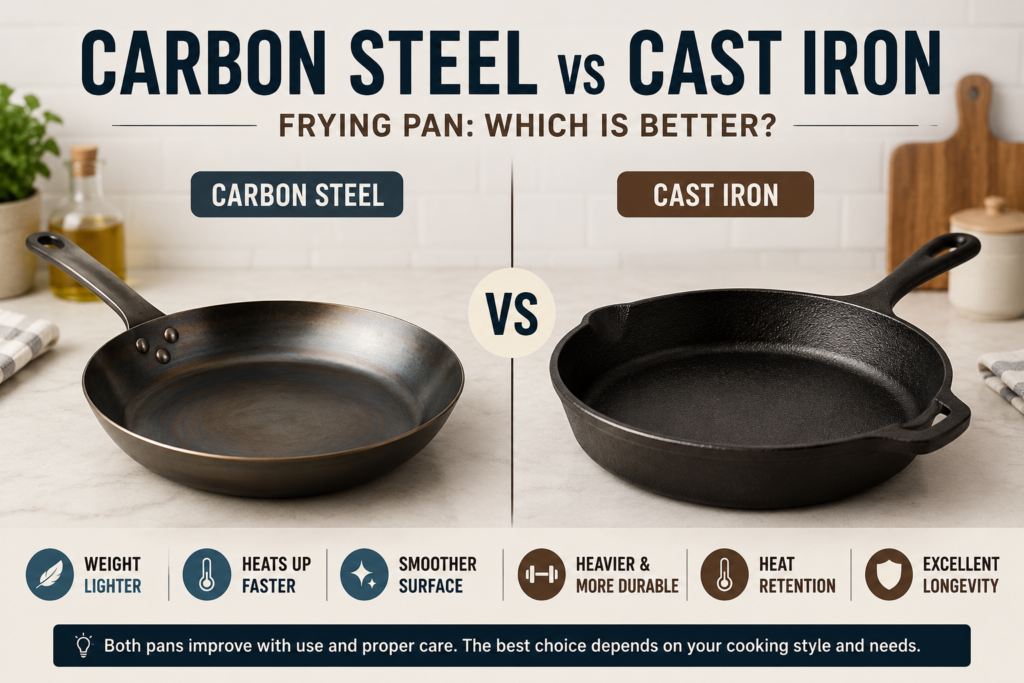
However, they cook differently. Carbon steel is generally lighter and responds more quickly to temperature changes, while cast iron is heavier and holds heat exceptionally well.
In this guide, we’ll compare carbon steel and cast iron frying pans in terms of weight, heat performance, cooking uses, maintenance, and durability to help you decide which one is better for your kitchen.
Carbon Steel vs Cast Iron: Quick Comparison
Carbon steel and cast iron share many similarities, but their differences in weight, heating speed, and heat retention can make each one better suited to different cooking styles.
| Feature | Carbon Steel | Cast Iron |
|---|---|---|
| Weight | Lighter | Heavier |
| Heating Speed | Faster | Slower |
| Heat Retention | Very Good | Excellent |
| High-Heat Cooking | Excellent | Excellent |
| Seasoning Required | Yes | Yes |
| Best For | Searing, stir-frying, sautéing | Searing, frying, baking |
Weight and Handling
Carbon steel frying pans are generally lighter and thinner than cast iron pans, making them easier to lift, move, and maneuver while cooking. This can be especially helpful when sautéing vegetables or tossing ingredients in the pan.
Cast iron pans are considerably heavier, but their weight contributes to their stability and excellent heat retention. For cooks who frequently move a pan between the stovetop and oven, the difference in weight may be an important consideration.
Heating Speed and Heat Retention
Carbon steel heats up and cools down more quickly than cast iron. This makes it easier to adjust the cooking temperature when you need more precise heat control.
Cast iron takes longer to heat, but once it becomes hot, it retains heat extremely well. This makes it especially useful for searing steaks, frying foods, and other cooking methods that benefit from steady, consistent heat.
Cooking Performance
Carbon steel is highly responsive to changes in temperature, making it excellent for sautéing, stir-frying, searing, and other cooking techniques where quick heat adjustments are useful.
Cast iron provides strong, steady heat and is particularly good for searing steaks, frying chicken, baking cornbread, and cooking foods that benefit from consistent heat for longer periods.
Both pans can develop a naturally nonstick cooking surface with proper seasoning, although the smoother surface of carbon steel can make it especially convenient for foods such as eggs once the pan is well seasoned.
Seasoning and Maintenance
Both carbon steel and cast iron frying pans require seasoning to help protect the metal from rust and develop a smoother cooking surface.
Carbon steel is generally quicker to season because of its smoother surface and lighter construction. After washing, it should be dried thoroughly and coated with a very thin layer of cooking oil.
Cast iron requires similar care. It should also be dried completely after cleaning and occasionally re-seasoned to maintain its protective surface.
Neither pan should be left soaking in water, and both can develop rust if they are stored while damp.
Durability and Lifespan
Both carbon steel and cast iron frying pans are extremely durable and can last for decades when properly cared for.
Carbon steel is strong but relatively lightweight. Its surface can develop scratches or discoloration with use, but these changes are usually normal and do not prevent the pan from performing well.
Cast iron is heavier and exceptionally durable. With proper seasoning and protection from moisture, a cast iron pan can last for generations.
For both types of cookware, preventing rust and maintaining the seasoning are the keys to a long lifespan.
Which One Should You Choose?
Choose carbon steel if you want a lighter pan that heats quickly and responds well to temperature changes. It is especially useful for stir-frying, sautéing, searing, and everyday stovetop cooking.
Choose cast iron if you prefer excellent heat retention and do not mind a heavier pan. It is especially well suited for searing steaks, frying, baking, and recipes that require steady heat for longer periods.
Both are excellent choices for high-heat cooking and can last for decades with proper care. The best choice ultimately depends on your cooking style, the foods you prepare most often, and how much weight you are comfortable handling.
Frequently Asked Questions
1. Is carbon steel better than cast iron?
Neither is better for everyone. Carbon steel is lighter and responds more quickly to temperature changes, while cast iron is heavier and retains heat longer. Carbon steel may be better for sautéing and stir-frying, while cast iron is excellent for searing, frying, and baking.
2. Which is better for steak, carbon steel or cast iron?
Both are excellent for cooking steak. Cast iron holds heat exceptionally well and is great for developing a deep crust, while carbon steel heats faster and is easier to handle. The best choice depends on your cooking style and preference.
3. Which pan is easier to maintain, carbon steel or cast iron?
Both require similar care, including thorough drying and occasional seasoning. Carbon steel may be slightly easier to handle because it is lighter, but both pans can rust if they are left wet or stored while damp.
4. Which pan is better for eggs?
A well-seasoned carbon steel pan is often a convenient choice for eggs because its smoother surface can develop excellent food-release properties. Well-seasoned cast iron can also cook eggs successfully, but it is heavier and takes longer to heat.
5. Which pan is better for high-heat cooking?
Both carbon steel and cast iron are excellent for high-heat cooking. Carbon steel heats up faster and responds more quickly to temperature changes, while cast iron retains heat longer and provides steady, consistent heat.
6. Can carbon steel and cast iron pans rust?
Yes. Both carbon steel and cast iron can rust when exposed to moisture for too long. Dry the pan thoroughly after washing and apply a thin layer of cooking oil when needed to help protect the surface.
Conclusion
Carbon steel and cast iron frying pans are both durable, versatile choices for cooks who want cookware that can handle high temperatures and last for many years.
Carbon steel is generally lighter, heats more quickly, and responds faster to temperature changes, making it a great choice for sautéing, stir-frying, and everyday stovetop cooking. Cast iron is heavier but offers exceptional heat retention, making it excellent for searing, frying, and baking.
Ultimately, the better choice depends on how you cook. If you value lighter weight and quicker temperature control, carbon steel may be the better fit. If you prefer steady heat and exceptional heat retention, cast iron may be the better choice.
With proper seasoning and care, either pan can become a reliable, long-lasting part of your kitchen.
Want to learn more about each pan? Read our guides: