Introduction
Ceramic frying pans are popular with home cooks because they offer a smooth, easy-to-clean cooking surface and often require less oil for everyday cooking. They are especially convenient for foods such as eggs, pancakes, fish, and vegetables.
Most ceramic frying pans are made with a metal base coated with a ceramic-based nonstick surface. Unlike traditional PTFE-based nonstick cookware, ceramic coatings use a different coating technology, although the nonstick performance can gradually decrease with regular use.
In this guide, we’ll look at the pros and cons of ceramic frying pans, their best uses, and how to care for them so you can decide whether one is right for your kitchen.
What Is a Ceramic Frying Pan?
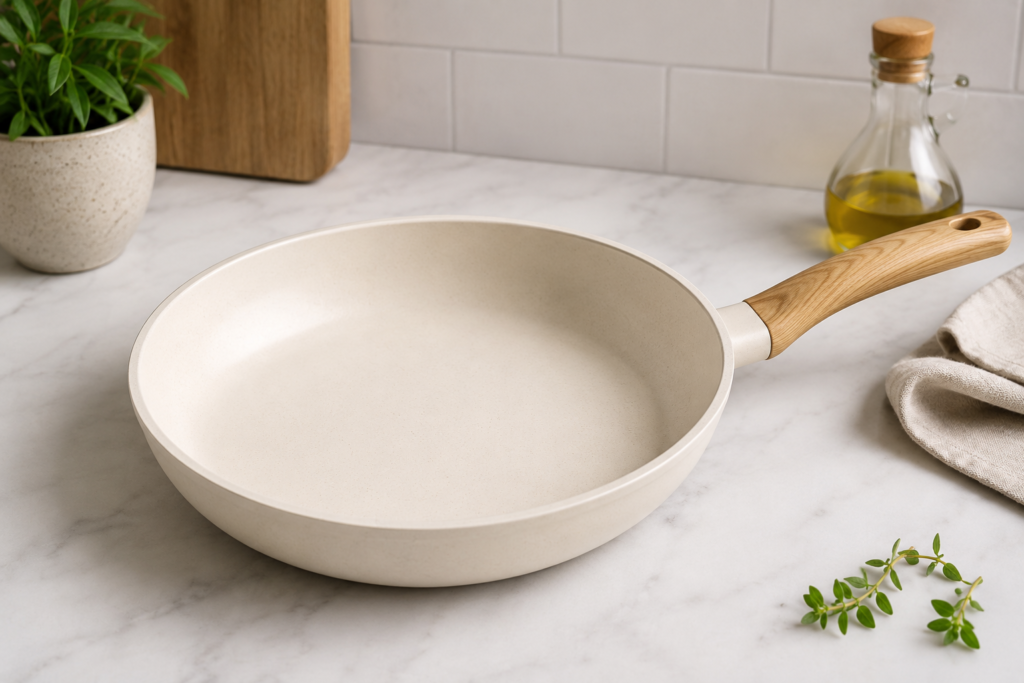
A ceramic frying pan usually has a metal body, often made of aluminum, covered with a ceramic-based nonstick coating. This coating provides a smooth cooking surface that helps food release easily and makes cleanup simple.
Ceramic pans heat quickly and are especially convenient for everyday foods that do not require extremely high temperatures. However, the ceramic coating can gradually lose some of its nonstick performance, particularly when regularly exposed to very high heat or abrasive utensils and cleaners.
Pros of Ceramic Frying Pans
Ceramic frying pans offer several advantages that make them convenient for everyday home cooking.
- Easy food release: The smooth surface works especially well for delicate foods such as eggs and pancakes.
- Requires less oil: Many foods can be cooked with only a small amount of oil or butter.
- Easy to clean: Food residue usually wipes away easily when the pan is properly cared for.
- Heats up quickly: Many ceramic pans have an aluminum base that responds quickly to changes in temperature.
- Good for everyday cooking: Ceramic pans work well for eggs, fish, vegetables, pancakes, and other foods cooked at low to medium heat.
Cons of Ceramic Frying Pans
Ceramic frying pans are convenient, but there are a few disadvantages to consider.
- Nonstick performance can decrease: The smooth cooking surface may become less nonstick over time.
- Sensitive to high heat: Frequent high-heat cooking can shorten the life of the ceramic coating.
- Avoid metal utensils: Metal utensils may scratch or damage the cooking surface.
- Requires gentle cleaning: Abrasive scrubbers and harsh cleaners should be avoided.
- May need replacement sooner: Unlike stainless steel or cast iron, a ceramic-coated pan may eventually need to be replaced when its cooking surface becomes worn.
Best Uses for a Ceramic Frying Pan
Ceramic frying pans are best suited for everyday foods that cook well at low to medium heat.
- Eggs and omelets: The smooth surface helps delicate eggs release easily.
- Pancakes and crepes: Great for foods that need easy flipping.
- Fish: Useful for gently cooking delicate fish fillets.
- Vegetables: Excellent for sautéing vegetables with a small amount of oil.
- Grilled sandwiches: Convenient for grilled cheese, quesadillas, and similar quick meals.
- Reheating leftovers: Useful for gently warming food without excessive sticking.
How to Care for a Ceramic Frying Pan
Proper care can help protect the ceramic cooking surface and extend the useful life of your frying pan.
- Use low to medium heat: Excessive heat can gradually reduce the performance of the ceramic coating.
- Avoid metal utensils: Use silicone, wooden, or nylon utensils to help prevent scratches.
- Wash gently: Use warm water, mild dish soap, and a soft sponge.
- Avoid abrasive cleaners: Steel wool and harsh scrubbers can damage the cooking surface.
- Let the pan cool before washing: Sudden temperature changes may cause warping or damage.
- Store carefully: If you stack cookware, place a pan protector or soft towel between pans to help prevent scratches.
Frequently Asked Questions
1. Are ceramic frying pans safe to use?
Ceramic frying pans are generally considered safe when used according to the manufacturer’s instructions. To help protect the cooking surface and extend the life of the pan, avoid overheating it and use low to medium heat whenever possible.
2. How long does a ceramic frying pan last?
The lifespan of a ceramic frying pan depends on its quality, how often it is used, and how well it is cared for. The nonstick performance may gradually decrease over time, so using low to medium heat and avoiding metal utensils and abrasive cleaners can help extend its useful life.
3. Can I use metal utensils on a ceramic frying pan?
It is best to avoid metal utensils because they can scratch or damage the ceramic cooking surface. Silicone, wooden, or nylon utensils are safer choices and can help keep the pan in good condition.
4. Can ceramic frying pans go in the dishwasher?
Some ceramic frying pans are labeled dishwasher-safe, but hand washing is usually the better choice. Washing the pan with warm water, mild dish soap, and a soft sponge can help protect the cooking surface and extend its lifespan.
5. What foods are best cooked in a ceramic frying pan?
Ceramic frying pans work especially well for foods that cook at low to medium heat, such as eggs, pancakes, fish, vegetables, and grilled sandwiches. For high-heat searing, stainless steel, cast iron, or carbon steel may be a better choice.
6. When should I replace a ceramic frying pan?
Consider replacing a ceramic frying pan when the cooking surface becomes badly scratched, chipped, or damaged, or when its nonstick performance has significantly decreased and food regularly sticks despite proper use and cleaning.
Conclusion
Ceramic frying pans are a convenient choice for everyday cooking, especially for foods such as eggs, pancakes, fish, and vegetables. Their smooth cooking surface makes food release easier and cleanup relatively simple.
However, ceramic coatings require gentle care and may gradually lose their nonstick performance over time. Using low to medium heat, avoiding metal utensils, and washing the pan gently can help extend its useful life.
For home cooks who want an easy-to-use pan for everyday low- to medium-heat cooking, a ceramic frying pan can be a practical addition to the kitchen.
Wondering how ceramic compares with traditional nonstick cookware? Read our guide: Nonstick Frying Pan: Pros, Cons, and Best Uses.