Choosing the right cutting board can make a big difference in your kitchen. Wood, plastic, and bamboo cutting boards each have unique advantages and disadvantages in terms of hygiene, durability, knife friendliness, and maintenance. In this guide, we’ll compare all three materials to help you decide which cutting board best fits your cooking style and kitchen needs.
What Are the Differences Between Wood, Plastic, and Bamboo Cutting Boards?
Each cutting board material has its own strengths and weaknesses. Wooden cutting boards are known for their durability and gentle surface that helps protect knife edges. Plastic cutting boards are affordable, lightweight, and dishwasher-safe, making them popular for everyday use. Bamboo cutting boards are eco-friendly, attractive, and harder than many types of wood, but they may be slightly tougher on knives. Understanding these differences will help you choose the right option for your cooking habits.
| Material | Hygiene | Knife Friendly | Maintenance |
| Wood | Good | Excellent | Moderate |
| Plastic | Very Good | Fair | Easy |
| Bamboo | Good | Good | Easy |
Pros and Cons of Each Cutting Board Material
Every cutting board material has advantages and disadvantages. The best choice depends on your cooking habits, budget, and maintenance preferences.
Wood Cutting Boards
Pros
- Gentle on knife edges
- Naturally attractive appearance
- Long-lasting with proper care
Cons
- Requires regular oiling
- Not dishwasher safe
- Can absorb moisture if neglected
Plastic Cutting Boards
Pros
- Affordable and lightweight
- Dishwasher safe
- Easy to replace
Cons
- Develops knife grooves over time
- May harbor bacteria in deep cuts
- Less environmentally friendly
Bamboo Cutting Boards
Pros
- Eco-friendly and sustainable
- Lightweight yet durable
- Attractive natural look
Cons
- Harder surface may dull knives faster
- Can crack if not maintained properly
- Quality varies by manufacturer
Which Cutting Board Is Best for Different Needs?
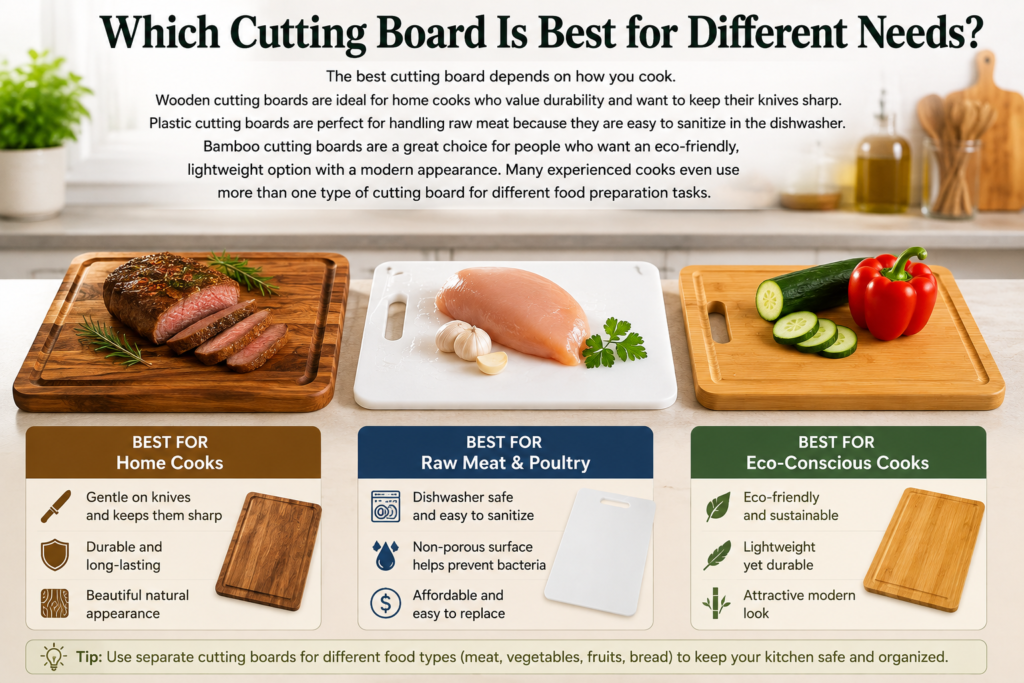
The best cutting board depends on how you cook. Wooden cutting boards are ideal for home cooks who value durability and want to keep their knives sharp. Plastic cutting boards are perfect for handling raw meat because they are easy to sanitize in the dishwasher. Bamboo cutting boards are a great choice for people who want an eco-friendly, lightweight option with a modern appearance. Many experienced cooks even use more than one type of cutting board for different food preparation tasks.
Frequently Asked Questions
Is a wooden cutting board more hygienic than plastic?
Surprisingly, both can be hygienic when cleaned properly. Wooden cutting boards naturally trap and reduce some bacteria, while plastic boards can be sanitized easily in a dishwasher.
Does bamboo dull knives faster than wood?
Yes. Bamboo is generally harder than many hardwoods, so it may wear down knife edges slightly faster with long-term use.
Which cutting board lasts the longest?
A high-quality wooden cutting board can last for many years if it is cleaned, dried, and oiled regularly.
Conclusion
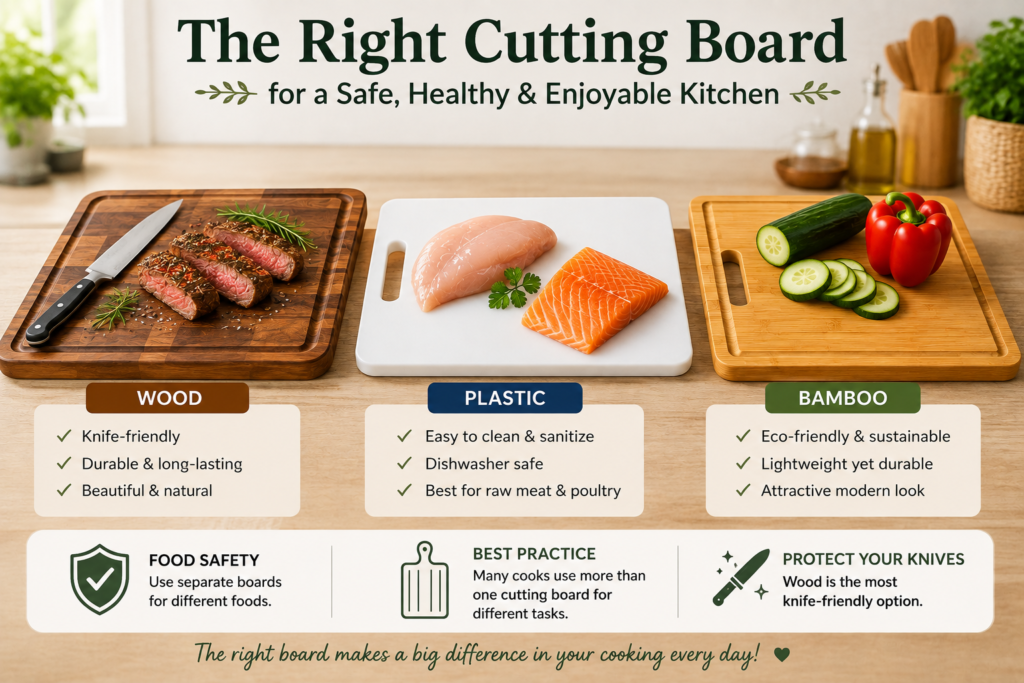
Many home cooks achieve the best results by using different cutting boards for different food preparation tasks. Choosing the right cutting board for each purpose will help improve food safety, extend the life of your knives, and make cooking more efficient every day.