Introduction
Eggs are simple to cook, but choosing the right frying pan can make a big difference. A good pan helps prevent sticking, makes flipping easier, and allows you to cook fried eggs, scrambled eggs, and omelets with less frustration.
Nonstick, ceramic, and well-seasoned carbon steel pans can all work well for eggs, but each has different advantages. Some are easier for beginners, while others offer greater durability and versatility.
In this guide, we’ll compare the best frying pan types for cooking eggs and help you decide which one is right for your kitchen.
Best Frying Pans for Eggs: Quick Comparison
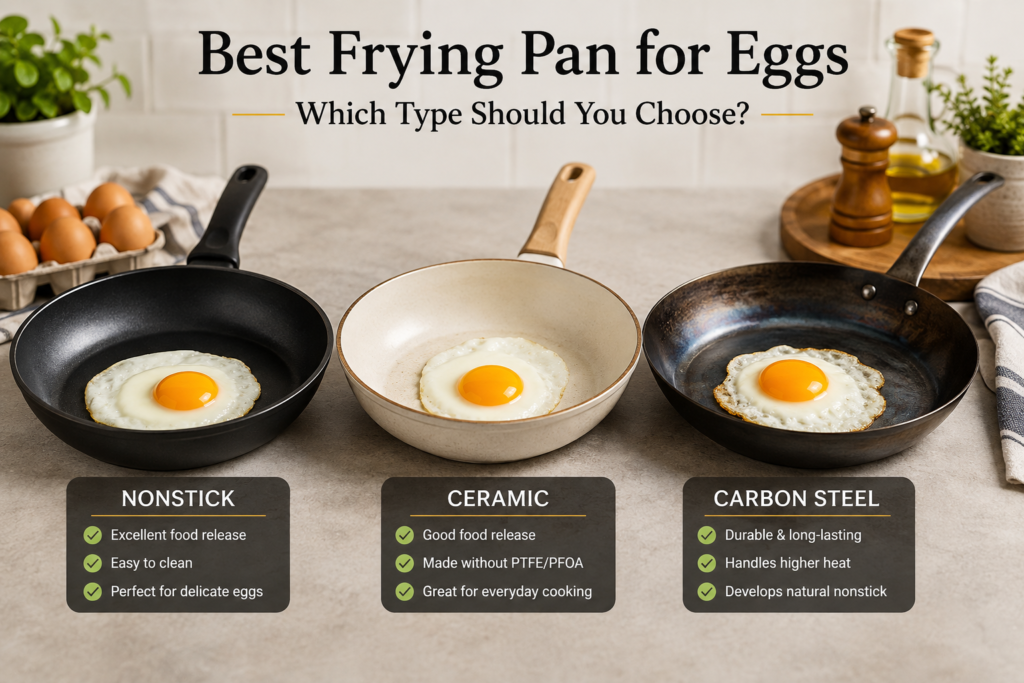
The best choice depends on whether you prioritize easy food release, durability, or versatility.
| Feature | Nonstick | Ceramic | Carbon Steel |
|---|---|---|---|
| Food Release | Excellent | Very Good | Very Good when seasoned |
| Ease of Use | Excellent | Excellent | Requires practice |
| Heat Level | Low to Medium | Low to Medium | Low to High |
| Maintenance | Easy | Easy | Requires seasoning |
| Durability | Moderate | Moderate | Excellent |
| Best For | Delicate eggs | Everyday egg cooking | Eggs and versatile cooking |
Nonstick Frying Pans for Eggs
For many home cooks, a traditional nonstick frying pan is one of the easiest choices for cooking eggs.
Its smooth surface helps fried eggs, scrambled eggs, and omelets release easily, often with only a small amount of butter or oil. Nonstick pans are also convenient for beginners because they require relatively little technique to prevent sticking.
For best results, use low to medium heat and avoid metal utensils that could damage the coating.
Ceramic Frying Pans for Eggs
Ceramic frying pans can also be an excellent option for everyday egg cooking. Their smooth ceramic-based cooking surface can provide good food release, particularly when the pan is relatively new and properly maintained.
They work well for fried eggs, scrambled eggs, and omelets cooked at low to medium temperatures.
Because ceramic coatings can gradually lose some of their food-release performance, gentle cleaning and avoiding excessive heat can help extend the useful life of the pan.
Carbon Steel Frying Pans for Eggs
A properly seasoned carbon steel frying pan can become an excellent pan for cooking eggs.
Unlike coated nonstick or ceramic cookware, carbon steel develops its cooking surface through seasoning. As layers of seasoning build up, the surface can become smoother and more resistant to sticking.
Carbon steel requires more technique and maintenance, but it is extremely durable and can also be used for many other cooking methods, including searing, sautéing, and high-heat cooking.
What About Cast Iron?
Cast iron can cook eggs successfully when it is well seasoned and properly preheated. However, its heavier weight and slower temperature response may make it less convenient than nonstick, ceramic, or carbon steel for quick everyday egg cooking.
Cast iron may be a good option for cooks who already use it regularly and maintain a well-seasoned cooking surface.
What Size Frying Pan Is Best for Eggs?
Pan size depends largely on how many eggs you normally cook.
A smaller frying pan can be convenient for one or two eggs because it keeps the eggs contained and is easy to handle. A larger pan provides more room when cooking several eggs or preparing larger omelets.
For most households, choosing a pan that comfortably accommodates the number of eggs you usually prepare is more important than following one specific size recommendation.
Tips for Cooking Eggs Without Sticking
Even with the right frying pan, proper cooking technique can make a significant difference.
- Preheat the pan gently rather than using very high heat.
- Use a small amount of butter or cooking oil when appropriate.
- Keep coated nonstick and ceramic pans at low to medium heat.
- Allow carbon steel to develop good seasoning before expecting easy food release.
- Avoid scratching coated pans with metal utensils.
- Clean and maintain the pan according to the manufacturer’s instructions.
Which Frying Pan Is Best for You?
Choose nonstick if your main priority is easy food release and simple everyday egg cooking.
Choose ceramic if you prefer a ceramic-coated cooking surface and want an easy-to-use pan for eggs and other delicate foods.
Choose carbon steel if you want a highly durable and versatile pan and are comfortable seasoning and maintaining it.
For most beginners who primarily want to cook eggs with minimal sticking, a good nonstick pan is often the simplest choice. More experienced cooks who want one pan for eggs as well as higher-heat cooking may prefer carbon steel.
Frequently Asked Questions
1. What type of frying pan is best for eggs?
Nonstick frying pans are often the easiest choice because eggs release readily from the cooking surface. Ceramic and properly seasoned carbon steel pans can also work very well.
2. Is ceramic or nonstick better for eggs?
Both are good choices. Traditional nonstick generally provides very easy food release, while ceramic can also perform well when its cooking surface is in good condition. The best choice depends on your preferences and how you care for the pan.
3. Can you cook eggs in a carbon steel pan?
Yes. A properly seasoned carbon steel pan can cook eggs very well. Using appropriate heat and a small amount of cooking fat can help prevent sticking, especially while the seasoning is still developing.
4. Why do my eggs stick to the frying pan?
Eggs may stick when the cooking surface is damaged or insufficiently seasoned, the temperature is unsuitable, or too little cooking fat is used. The exact cause depends on the type of pan.
5. Should I use butter or oil when cooking eggs?
Either can work. Butter adds flavor and can help prevent sticking, while cooking oil can also provide lubrication. The best choice depends on the cooking temperature and the flavor you prefer.
6. Should I cook eggs on high or low heat?
Low to medium heat is generally better for most egg dishes. Excessively high heat can cook eggs too quickly and may also shorten the lifespan of coated nonstick or ceramic cookware.
Conclusion
The best frying pan for eggs depends on what you value most in your cookware.
Traditional nonstick pans are particularly convenient for easy food release and everyday egg cooking. Ceramic pans offer another easy-to-use option for low- to medium-heat cooking, while properly seasoned carbon steel provides excellent durability and greater versatility.
For beginners, nonstick is often the simplest choice. For cooks who are comfortable with seasoning and maintenance, carbon steel can be a long-lasting alternative that works for eggs as well as many other foods.
Whatever pan you choose, appropriate heat, gentle utensils, and proper care can make cooking eggs easier and help your cookware perform at its best.
Related Frying Pan Guides
Nonstick Frying Pan: Pros, Cons, and Best Uses