Preparing raw meat safely starts with using the right cutting board. The wrong cutting board or poor cleaning habits can increase the risk of cross-contamination and foodborne illness. In this guide, you’ll learn which cutting board materials are safest for raw meat, how to clean them properly, and simple tips to keep your kitchen safe.
Why Do You Need a Separate Cutting Board for Raw Meat?
Raw meat can contain harmful bacteria such as Salmonella, Campylobacter, and E. coli. If the same cutting board is used for vegetables, bread, or cooked food without proper cleaning, these bacteria can spread and cause foodborne illness. Using a dedicated cutting board for raw meat is one of the simplest ways to reduce the risk of cross-contamination in your kitchen.
- Prevents cross-contamination
- Improves kitchen hygiene
- Reduces foodborne illness risk
- Keeps cooked foods safer
Which Cutting Board Material Is Best for Raw Meat?
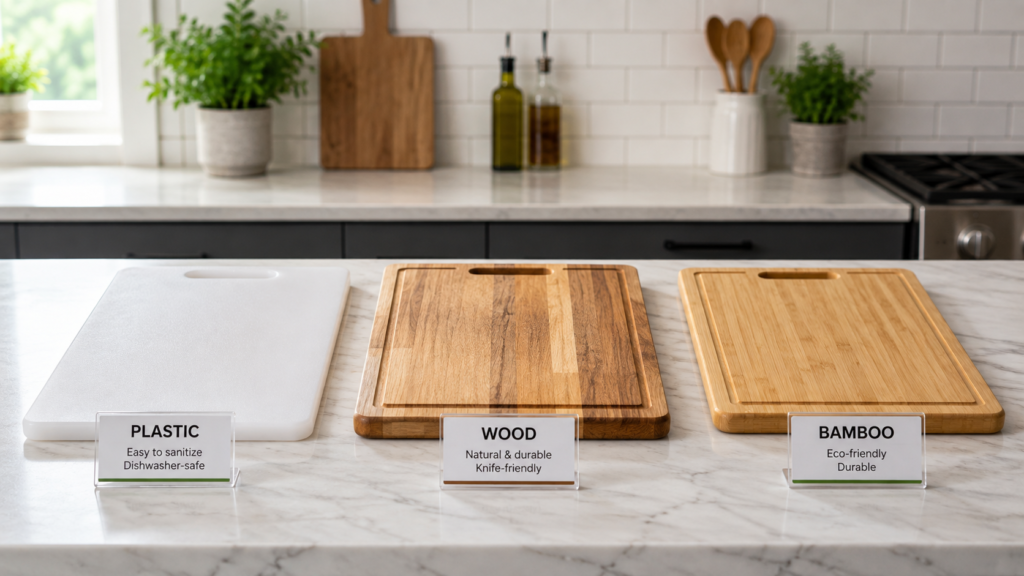
Different cutting board materials have different advantages when handling raw meat. Plastic cutting boards are generally recommended because they are non-porous, dishwasher-safe, and easy to sanitize. Wooden cutting boards can also be safe when cleaned properly, as some hardwoods naturally reduce bacterial growth. Bamboo cutting boards are durable and eco-friendly but require careful maintenance to prevent cracks that can trap bacteria.
| Material | Best for Raw Meat | Easy to Sanitize | Knife Friendly |
| Plastic | ⭐⭐⭐⭐⭐ | Excellent | Fair |
| Wood | ⭐⭐⭐⭐☆ | Good | Excellent |
| Bamboo | ⭐⭐⭐☆☆ | Good | Good |
Best Practices for Using a Raw Meat Cutting Board
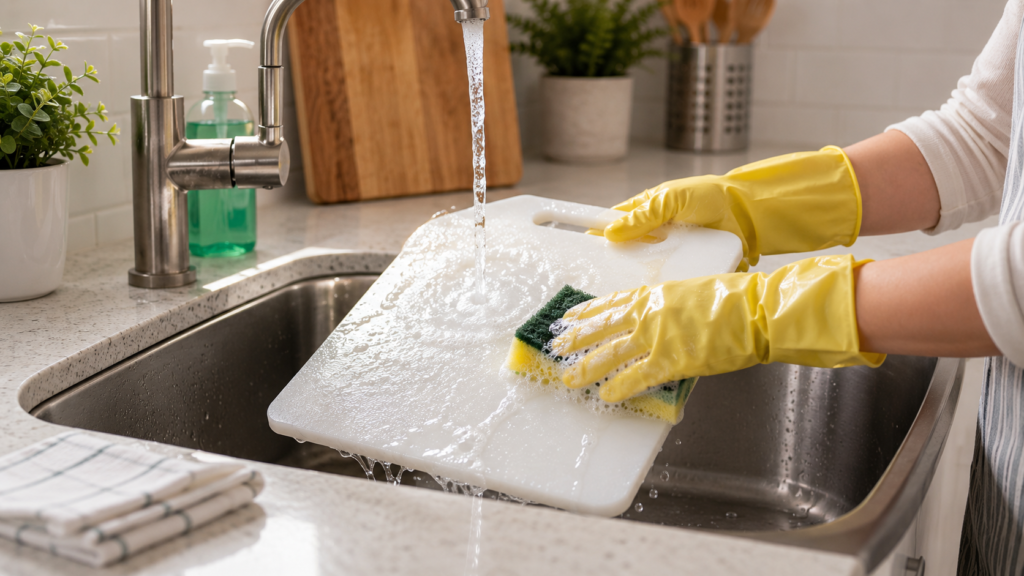
Using the right cutting board is only part of food safety. Proper handling and cleaning habits are just as important. Always use a separate cutting board for raw meat, and never place cooked food on the same board without washing it thoroughly. Wash the cutting board with hot, soapy water after each use, or use a dishwasher if the board is dishwasher-safe. Replace cutting boards that have deep knife grooves or cracks where bacteria can hide.
- Use a separate board for raw meat.
- Wash immediately after use.
- Sanitize regularly.
- Replace damaged cutting boards.
Frequently Asked Questions
Is it safe to use a wooden cutting board for raw meat?
Yes. A high-quality hardwood cutting board can be safe for raw meat if it is cleaned and dried properly after each use. Regular maintenance is essential.
Should I use separate cutting boards for meat and vegetables?
Yes. Using separate cutting boards greatly reduces the risk of cross-contamination and helps keep fresh foods safe.
How often should I replace a cutting board?
Replace a cutting board when it develops deep grooves, cracks, or excessive wear that cannot be cleaned effectively.
Conclusion
Choosing the best cutting board for raw meat is an important step toward a safer kitchen. Plastic cutting boards are the easiest to sanitize, wooden boards offer excellent durability and knife protection, and bamboo provides an eco-friendly alternative with proper care. No matter which material you choose, using a dedicated cutting board for raw meat and cleaning it thoroughly after every use will help prevent cross-contamination and keep your family safe.
If you’re still deciding which cutting board material fits your cooking style, check out our complete comparison guide:
Wood vs Plastic vs Bamboo Cutting Boards: Which One Is Best?