Introduction
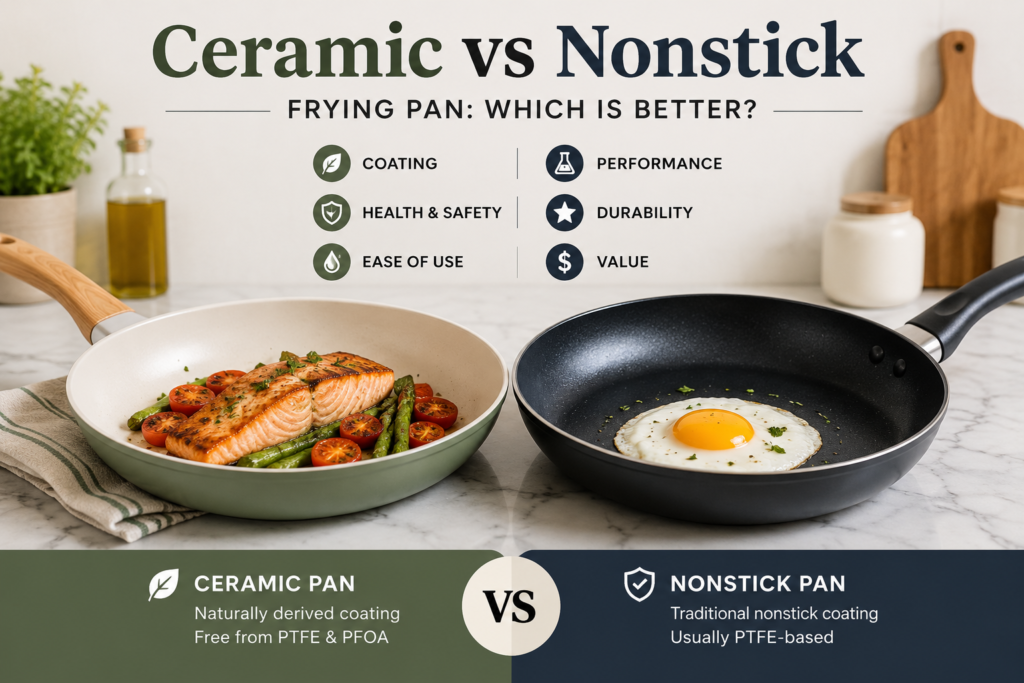
Ceramic and traditional nonstick frying pans are both popular choices for everyday cooking. They make it easier to cook delicate foods such as eggs, pancakes, fish, and vegetables with less sticking and relatively easy cleanup.
However, ceramic and traditional nonstick pans use different types of cooking surfaces and can differ in durability, heat tolerance, and long-term nonstick performance.
In this guide, we’ll compare ceramic and nonstick frying pans to help you decide which one is better suited to your cooking style and kitchen.
Ceramic vs Nonstick: Quick Comparison
Both pans are convenient for everyday cooking, but there are some important differences to consider.
| Feature | Ceramic | Nonstick |
|---|---|---|
| Cooking Surface | Ceramic-based coating | Usually PTFE-based coating |
| Food Release | Very Good | Excellent |
| Best Heat Level | Low to Medium | Low to Medium |
| Cleaning | Easy | Easy |
| Metal Utensils | Avoid | Avoid |
| Best For | Eggs, fish, vegetables | Eggs, pancakes, delicate foods |
Cooking Performance
Both ceramic and traditional nonstick frying pans are designed to reduce sticking and make everyday cooking easier.
Traditional nonstick pans generally provide excellent food release, especially for delicate foods such as eggs, pancakes, and fish. Ceramic pans can also provide very good food release, particularly when they are new and properly cared for.
Neither type is usually the best choice for extremely high-heat cooking. Stainless steel, carbon steel, or cast iron may be more suitable when strong searing and very high temperatures are required.
Heat and Temperature
Ceramic and traditional nonstick pans generally perform best at low to medium heat. Excessive heat can shorten the useful life of either cooking surface.
Preheating gently and avoiding prolonged empty heating can help protect the coating. Always follow the manufacturer’s temperature recommendations because construction and oven-safe limits vary between pans.
Durability and Lifespan
The lifespan of either pan depends on its quality, frequency of use, and how it is maintained.
Ceramic coatings can gradually lose some of their food-release performance with regular use. Traditional nonstick coatings can also wear or become damaged over time, particularly when exposed to excessive heat, scratching, or abrasive cleaning.
Using appropriate utensils and gentle cleaning methods can help either type of pan last longer.
Cleaning and Maintenance
Both ceramic and traditional nonstick frying pans are relatively easy to maintain.
Use warm water, mild dish soap, and a soft sponge for routine cleaning. Avoid steel wool and abrasive cleaners that may damage the cooking surface.
Wooden, silicone, or nylon utensils are generally better choices than metal utensils. Allow the pan to cool before washing it, and follow the manufacturer’s care instructions.
Which One Should You Choose?
Choose ceramic if you prefer a ceramic-based cooking surface and primarily cook foods such as eggs, vegetables, pancakes, and fish at low to medium temperatures.
Choose traditional nonstick if easy food release and convenient everyday cooking are your main priorities. It is particularly useful for eggs, pancakes, crepes, and other delicate foods.
Neither option is necessarily better for everyone. Your choice should depend on the foods you cook most often, how you use your cookware, and how much maintenance you are comfortable with.
Frequently Asked Questions
1. Is ceramic better than nonstick?
Neither is automatically better for everyone. Ceramic pans offer a ceramic-based cooking surface, while traditional nonstick pans generally provide excellent and consistent food release. The better choice depends on your cooking habits and preferences.
2. Which is better for eggs, ceramic or nonstick?
Both can work very well for eggs. Traditional nonstick pans are especially known for easy food release, while a ceramic pan in good condition can also cook eggs with minimal sticking.
3. Which pan lasts longer?
Lifespan varies considerably depending on the quality of the pan and how it is used. Both ceramic and traditional nonstick coatings can gradually lose performance, especially when exposed to excessive heat, metal utensils, or abrasive cleaning.
4. Can I use metal utensils on ceramic or nonstick pans?
It is generally better to avoid metal utensils on both types of pans. Wooden, silicone, or nylon utensils can help reduce scratching and protect the cooking surface.
5. Can ceramic and nonstick frying pans go in the dishwasher?
Some models are labeled dishwasher-safe, but hand washing is often gentler on coated cookware. Always check the manufacturer’s care instructions for your specific pan.
6. When should I replace a ceramic or nonstick frying pan?
Consider replacing a coated frying pan when the cooking surface becomes significantly scratched, chipped, peeling, or otherwise damaged, or when its nonstick performance has deteriorated enough that it no longer works well for normal cooking.
Conclusion
Ceramic and traditional nonstick frying pans are both convenient choices for everyday cooking. They are particularly useful for delicate foods and recipes that do not require extremely high temperatures.
Ceramic pans offer a ceramic-based cooking surface and good food release, while traditional nonstick pans are known for consistently easy food release and simple cleanup.
Whichever type you choose, using low to medium heat, avoiding metal utensils, and cleaning the pan gently can help extend its useful life.
Ultimately, the better choice depends on your cooking habits and personal preferences.
Want to learn more about each type of pan? Read our guides: