A cutting board is one of the most frequently used tools in the kitchen, but proper cleaning and maintenance are often overlooked. Without the right care, cutting boards can develop stains, odors, deep grooves, or cracks that make them harder to keep clean. The best cleaning method also depends on whether your board is made of wood, plastic, or bamboo. In this guide, you’ll learn how to clean, sanitize, dry, and maintain your cutting board properly so it stays safe, clean, and in good condition for longer.
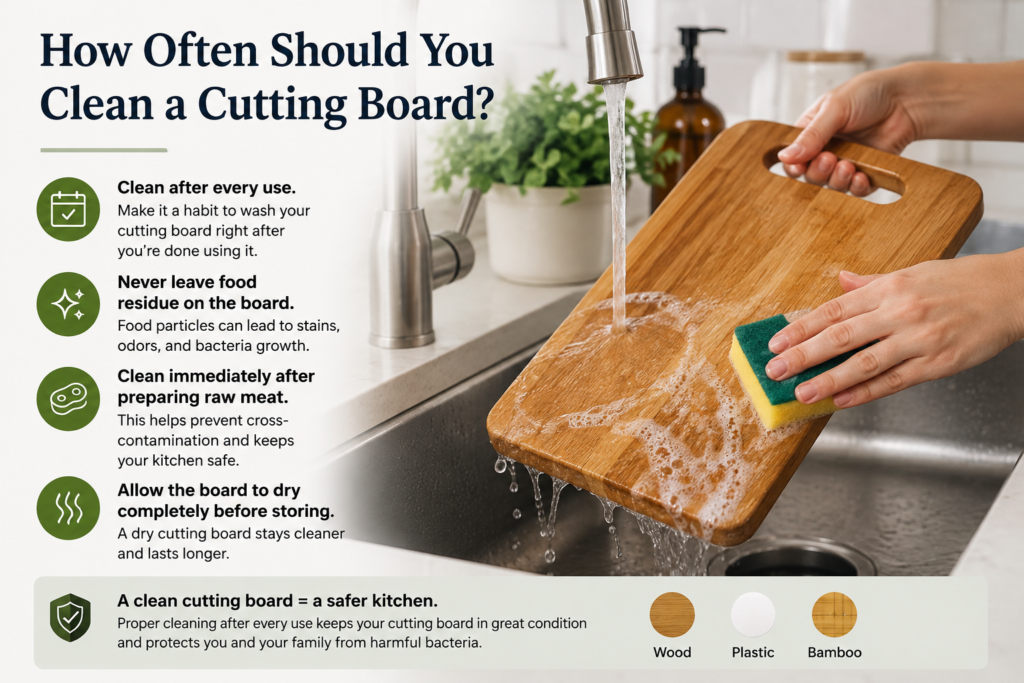
How Often Should You Clean a Cutting Board?
You should clean your cutting board immediately after every use, especially after preparing raw meat, poultry, or seafood. Washing it promptly helps prevent food residue, odors, and bacteria from remaining on the surface. The cleaning method depends on the material of the board, but every cutting board should be washed thoroughly and allowed to dry completely before being stored.
- Clean after every use.
- Never leave food residue on the board.
- Clean immediately after preparing raw meat.
- Allow the board to dry completely before storing.
How to Clean Different Types of Cutting Boards
Different cutting board materials require different cleaning methods. Wood and bamboo boards need gentler care because too much water or dishwasher heat can cause warping or cracking. Plastic cutting boards are generally easier to sanitize and can often be cleaned in the dishwasher. Using the right cleaning method for each material helps keep your cutting board hygienic and extends its lifespan.
How to Clean a Wooden Cutting Board
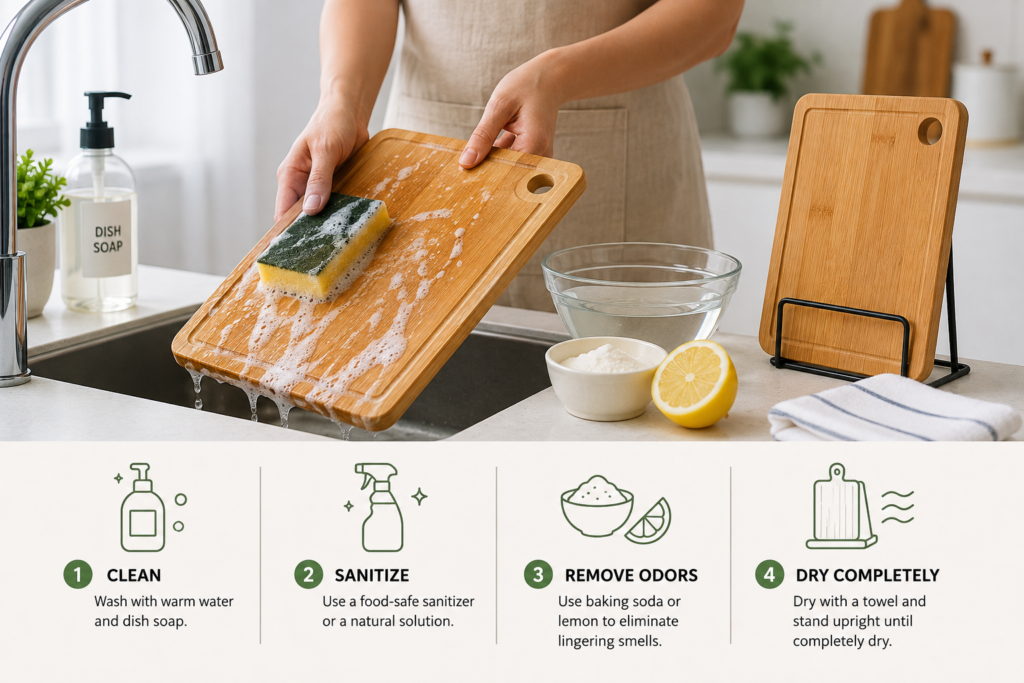
Wash a wooden cutting board by hand with warm water and mild dish soap immediately after use. Scrub both sides of the board with a clean sponge or brush, then rinse it thoroughly. Avoid soaking a wooden cutting board in water or putting it in the dishwasher, as prolonged moisture and high heat can cause the wood to warp or crack. After washing, wipe away excess water and stand the board upright so air can circulate around it and allow it to dry completely.
- Wash by hand with warm, soapy water.
- Do not soak the board in water.
- Avoid putting wooden boards in the dishwasher.
- Dry upright with good air circulation.
How to Clean a Plastic Cutting Board
Plastic cutting boards are easy to clean and sanitize, making them a practical choice for everyday food preparation. Wash the board with hot water and dish soap after each use, scrubbing both sides and any grooves where food particles may collect. Most plastic cutting boards can also be cleaned in the dishwasher, but always check the manufacturer’s instructions first. Allow the board to dry completely before storing it.
- Wash with hot water and dish soap.
- Scrub grooves and both sides thoroughly.
- Use the dishwasher if the board is dishwasher-safe.
- Dry completely before storing.
How to Clean a Bamboo Cutting Board
Wash a bamboo cutting board by hand with warm water and mild dish soap after each use. Use a soft sponge or brush to remove food residue, then rinse the board thoroughly. Avoid soaking bamboo in water or putting it in the dishwasher because excess moisture and heat can cause warping, splitting, or cracking. Dry the board with a clean towel and stand it upright until completely dry.
- Wash by hand with warm, soapy water.
- Do not soak in water.
- Do not put bamboo boards in the dishwasher.
- Dry upright before storing.
How to Sanitize a Cutting Board and Remove Odors
Regular washing removes most food residue, but cutting boards may occasionally need extra cleaning to reduce odors and keep the surface fresh. After washing the board with soap and water, you can use a food-safe sanitizing method appropriate for the board material. For wooden and bamboo boards, avoid soaking the surface or using harsh cleaning methods that may damage the material. Always rinse when necessary and allow the board to dry completely before storing it.
- Clean the board thoroughly before sanitizing.
- Avoid soaking wood and bamboo boards.
- Remove lingering odors promptly.
- Let the board dry completely after cleaning.
How to Maintain Your Cutting Board
Proper maintenance helps extend the life of your cutting board and keeps it in good condition. Always allow the board to dry completely before storing it, and avoid leaving it in a damp sink or near excessive heat. Wooden and bamboo cutting boards may also benefit from occasional conditioning with food-grade mineral oil to help prevent drying and cracking. Plastic boards do not require oiling, but they should be replaced when deep grooves or permanent damage make them difficult to clean.
- Store cutting boards only when completely dry.
- Keep wood and bamboo away from excessive heat and moisture.
- Condition wood and bamboo with food-grade mineral oil when needed.
- Replace boards with deep cracks or heavily worn grooves.
When Should You Replace a Cutting Board?
Even with proper cleaning and maintenance, cutting boards do not last forever. Deep knife grooves, cracks, warping, and permanent stains can make a board harder to clean and may allow food particles and bacteria to remain on the surface. If your cutting board has damage that cannot be cleaned effectively, replacing it is the safest choice.
- Deep knife grooves that are difficult to clean.
- Cracks or splits in the surface.
- Severe warping or damage.
- Persistent stains or odors that do not disappear.
Frequently Asked Questions
Can I put a cutting board in the dishwasher?
Plastic cutting boards are often dishwasher-safe, but always check the manufacturer’s instructions. Wooden and bamboo cutting boards should generally be washed by hand because dishwasher heat and prolonged moisture can cause warping, splitting, or cracking.
How often should I sanitize my cutting board?
A cutting board should be washed thoroughly after every use. Extra sanitizing is especially useful after preparing raw meat, poultry, or seafood. Always use a sanitizing method that is appropriate for the board material.
Can I use the same cutting board for meat and vegetables?
Using separate cutting boards for raw meat and ready-to-eat foods is a simple way to reduce cross-contamination. If you use the same board, it should be thoroughly washed and sanitized before preparing other foods.
How do I keep a wooden cutting board from cracking?
Avoid soaking it or putting it in the dishwasher, dry it completely after washing, and condition it periodically with food-grade mineral oil.
Conclusion
Keeping your cutting board clean and well maintained is essential for a safe and hygienic kitchen. Wood and bamboo boards need gentle hand washing and proper drying, while plastic boards are easier to sanitize and may be dishwasher-safe. With the right cleaning routine and regular maintenance, your cutting board can stay clean, safe, and useful for years.
Want to learn more about choosing the right cutting board? Check out our guide:
Wood vs Plastic vs Bamboo Cutting Boards: Which One Is Best?