Introduction
A good mixing bowl is one of the simplest yet most useful tools in any kitchen. Whether you are whisking eggs, mixing cake batter, tossing a salad, marinating meat, or preparing ingredients for dinner, the right bowl can make the job easier and more comfortable.
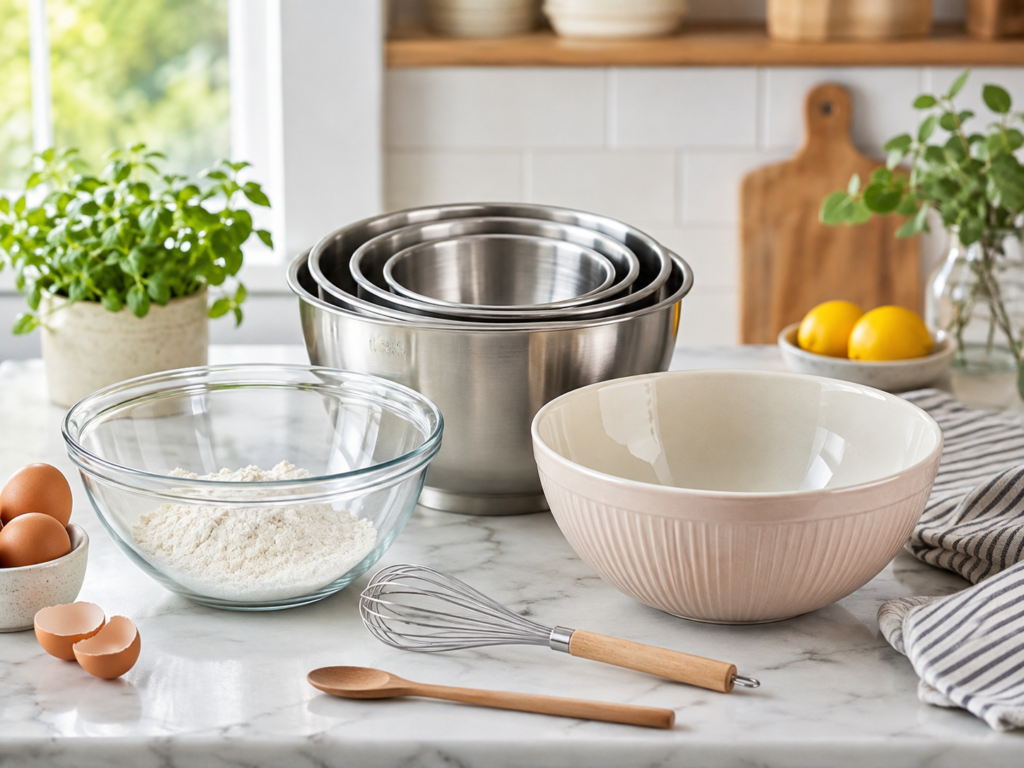
Mixing bowls come in several materials, including stainless steel, glass, plastic, and ceramic. Each type has its own advantages and disadvantages, and the best choice depends on how you plan to use it.
In this guide, we’ll look at the most common types of mixing bowls, compare their materials, and help you decide which ones are best for your kitchen.
What Is a Mixing Bowl?
A mixing bowl is a deep, round bowl designed for combining, whisking, stirring, tossing, and preparing ingredients.
Mixing bowls are available in many sizes, from small bowls for sauces and eggs to large bowls for bread dough, salads, or large batches of food.
Many mixing bowl sets include several nesting bowls that fit inside one another, which can help save storage space.
Common Mixing Bowl Materials
The four most common mixing bowl materials are:
- Stainless steel
- Glass
- Plastic
- Ceramic
Each material works well for different types of kitchen tasks.
Stainless Steel Mixing Bowls
Stainless steel mixing bowls are lightweight, durable, and extremely versatile.
They are commonly used by both home cooks and professional chefs because they are easy to handle and difficult to break.
Advantages of Stainless Steel Mixing Bowls
- Lightweight and easy to carry
- Very durable
- Resistant to breaking and chipping
- Easy to clean
- Often dishwasher-safe
- Usually stack or nest easily
- Great for whisking, mixing, and tossing ingredients
Stainless steel bowls are also useful when making whipped cream or other foods that benefit from a cold bowl because the metal can be chilled quickly.
Disadvantages of Stainless Steel Mixing Bowls
Stainless steel bowls are not microwave-safe, and because they are opaque, you cannot see your ingredients through the sides of the bowl.
They can also slide on the counter unless the bowl has a silicone or non-slip base.
Glass Mixing Bowls
Glass mixing bowls are popular because they are sturdy, attractive, and easy to see through while you work.
They are useful for mixing ingredients, preparing batter, and storing food.
Advantages of Glass Mixing Bowls
- Transparent, making it easy to see ingredients
- Do not easily absorb odors or stains
- Often microwave-safe
- Many are dishwasher-safe
- Useful for both mixing and serving
Glass bowls can also be helpful when you need to monitor the consistency of batter or dough from different angles.
Disadvantages of Glass Mixing Bowls
Glass bowls are heavier than stainless steel or plastic bowls.
They can also break if dropped or exposed to sudden temperature changes.
Plastic Mixing Bowls
Plastic mixing bowls are lightweight, affordable, and easy to handle.
They are especially useful for everyday food preparation.
Advantages of Plastic Mixing Bowls
- Lightweight
- Affordable
- Easy to carry
- Available in many sizes and colors
- Less likely to break if dropped
- Often available with lids
Disadvantages of Plastic Mixing Bowls
Plastic can sometimes absorb odors or stains, especially when used with strongly colored or oily foods.
Over time, plastic may also become scratched.
When choosing plastic bowls, look for durable, food-safe materials that are designed for repeated kitchen use.
Ceramic Mixing Bowls
Ceramic mixing bowls are heavier and more decorative than most other mixing bowls.
They can work well for both food preparation and serving.
Advantages of Ceramic Mixing Bowls
- Attractive appearance
- Stable on the countertop
- Available in many colors and designs
- Can often go directly from preparation to serving
Disadvantages of Ceramic Mixing Bowls
Ceramic bowls can be heavy and may chip or break if dropped.
They are usually less convenient for frequent whisking or large batches compared with lightweight stainless steel bowls.
Stainless Steel vs Glass vs Plastic vs Ceramic Mixing Bowls
Here is a quick comparison:
| Material | Best For | Main Advantage | Main Drawback |
|---|---|---|---|
| Stainless Steel | Everyday mixing, baking, whipping | Lightweight and durable | Not microwave-safe |
| Glass | Baking and microwave use | Easy to see ingredients | Heavy and breakable |
| Plastic | Everyday prep and storage | Lightweight and affordable | Can stain or absorb odors |
| Ceramic | Mixing and serving | Attractive and stable | Heavy and breakable |
For most kitchens, having more than one type of mixing bowl can be useful.
What Size Mixing Bowls Do You Need?
A set with several sizes is usually the most practical choice.
Small Mixing Bowls
Small bowls are useful for:
- Beating eggs
- Mixing sauces
- Preparing dressings
- Holding chopped ingredients
- Combining spices
Medium Mixing Bowls
Medium bowls are good for:
- Cake batter
- Cookie dough
- Pancake batter
- Small salads
- Mixing ingredients for everyday meals
Large Mixing Bowls
Large bowls are useful for:
- Bread dough
- Large salads
- Mixing large batches
- Marinating meat
- Tossing vegetables
A nesting set with small, medium, and large bowls can cover most everyday cooking needs while taking up less cabinet space.
Features to Look for in a Mixing Bowl
Besides the material and size, several small features can make a mixing bowl easier to use.
Non-Slip Base
A silicone or rubber base can keep the bowl from moving while you whisk or stir.
This can be especially helpful when mixing thicker doughs or batters.
Pouring Spout
A pouring spout makes it easier to transfer pancake batter, sauces, dressings, and other liquids without creating a mess.
Handle
Some bowls include a handle that makes it easier to hold the bowl firmly while mixing.
Lid
Mixing bowls with lids can also be used for storing prepared ingredients or leftovers.
Nesting Design
Nesting bowls fit inside one another and take up less storage space.
This is especially useful in smaller kitchens.
Which Mixing Bowl Is Best for Baking?
For baking, stainless steel and glass bowls are both excellent choices.
Stainless steel bowls are lightweight and easy to use for whisking eggs, whipping cream, and mixing dough or batter.
Glass bowls are useful when you want to see your ingredients clearly and can also be convenient for recipes that require microwave use.
Many home bakers find that having both stainless steel and glass bowls gives them the most flexibility.
Which Mixing Bowl Is Best for Everyday Cooking?
For everyday cooking, stainless steel mixing bowls are one of the most practical options.
They are durable, lightweight, easy to clean, and available in many sizes.
A set of three to five nesting stainless steel bowls can handle most common kitchen tasks.
Are Mixing Bowls with Lids Worth It?
Mixing bowls with lids can be very useful.
They allow you to mix ingredients and then store them without transferring the food to another container.
They are especially convenient for:
- Marinating meat
- Preparing salads ahead of time
- Storing dough
- Keeping chopped ingredients fresh
- Refrigerating leftovers
If storage and meal preparation are important to you, a mixing bowl set with lids may be worth considering.
How Many Mixing Bowls Do You Really Need?
Most home kitchens can work well with three to five mixing bowls in different sizes.
A basic set might include:
- One small bowl
- One medium bowl
- One large bowl
If you bake or cook frequently, having additional bowls can be helpful when several ingredients need to be prepared separately.
FAQ
What is the best material for a mixing bowl?
Stainless steel is one of the best all-around choices because it is lightweight, durable, and easy to clean. Glass is also an excellent option, especially for baking and microwave use.
Can stainless steel mixing bowls go in the microwave?
No. Metal bowls should never be placed in a microwave.
Are glass mixing bowls better than stainless steel?
Neither is better for every situation. Stainless steel is lighter and more durable, while glass allows you to see the ingredients and can often be used in the microwave.
Are plastic mixing bowls safe?
Food-grade plastic mixing bowls designed for kitchen use are generally suitable for food preparation. Follow the manufacturer’s instructions regarding microwave and dishwasher use.
Why do some mixing bowls have silicone bottoms?
Silicone bottoms help prevent the bowl from sliding across the countertop while you are stirring or whisking.
What size mixing bowl is most useful?
A medium bowl is useful for many everyday tasks, but having a set of small, medium, and large bowls is more versatile.
Should I buy mixing bowls individually or as a set?
A nesting set is usually the most convenient and economical option for a home kitchen because it provides several sizes while saving storage space.
Conclusion
Mixing bowls are simple kitchen tools, but choosing the right ones can make everyday cooking and baking much easier.
Stainless steel bowls are lightweight and durable, glass bowls are versatile and easy to see through, plastic bowls are affordable and convenient, and ceramic bowls are attractive enough to use for both preparation and serving.
For most home cooks, a nesting set of several sizes is a practical starting point. If you cook or bake frequently, combining stainless steel and glass bowls can give you even more flexibility.
The best mixing bowl is ultimately the one that feels comfortable to use, fits your storage space, and works well for the foods you prepare most often.