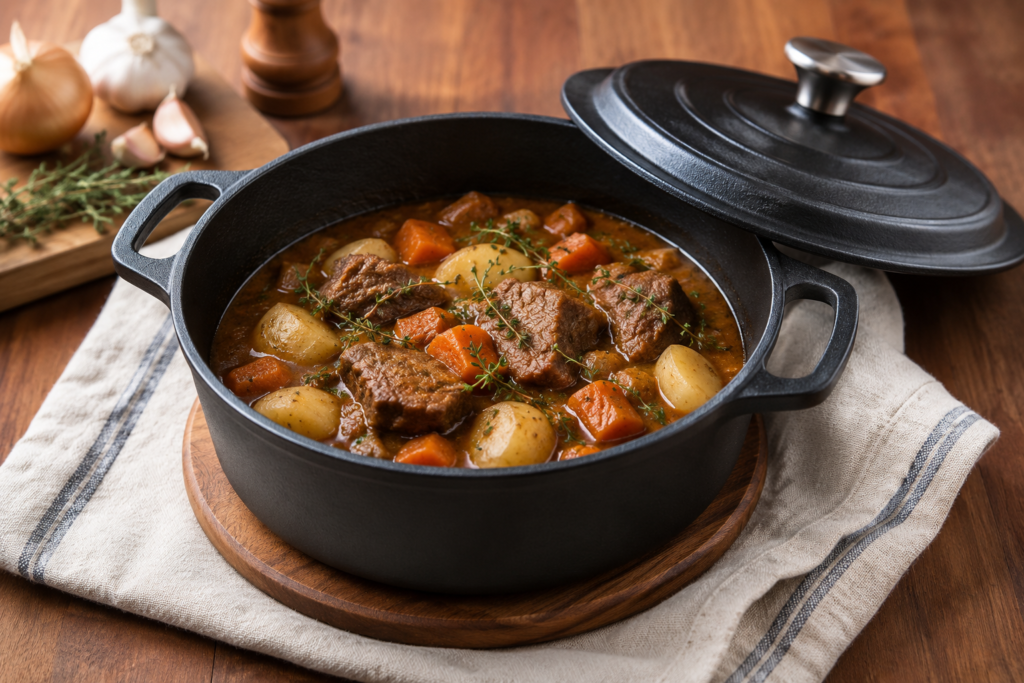
Dutch Oven: Uses, Types, and How to Choose the Right One
Introduction
A Dutch oven is one of the most versatile pieces of cookware you can have in your kitchen. With its thick walls, heavy lid, and excellent heat retention, it can handle everything from slow-cooked stews and soups to braised meats, freshly baked bread, and one-pot meals.
Dutch ovens come in different materials, sizes, and styles, so choosing the right one can sometimes be confusing. In this guide, we’ll look at what a Dutch oven is, its most common uses, the different types available, and what to consider before buying one.
What Is a Dutch Oven?
A Dutch oven is a heavy, deep cooking pot with thick walls and a tight-fitting lid. Most traditional Dutch ovens are made from cast iron, although other materials are also available.
Because of its thick construction, a Dutch oven heats gradually and holds heat very well. The heavy lid also helps keep moisture inside the pot, making it especially useful for foods that need to cook slowly.
Many Dutch ovens can be used on the stovetop and in the oven, allowing you to start cooking in one place and finish in another without changing cookware.
What Is a Dutch Oven Used For?
One of the biggest advantages of a Dutch oven is its versatility. It can be used for many different cooking methods.
Common uses include:
- Soups and stews
- Braising meat
- Slow cooking
- Roasting
- Baking bread
- Cooking beans
- Making sauces
- One-pot meals
- Deep frying
For example, you can brown meat on the stovetop, add vegetables and liquid, cover the pot, and transfer the entire Dutch oven directly into the oven for slow cooking.
Types of Dutch Ovens
Enameled Cast Iron Dutch Oven
Enameled cast iron Dutch ovens have a cast iron core covered with a smooth enamel coating.
They provide excellent heat retention while eliminating the need to season the cast iron. The enamel surface also makes them suitable for cooking acidic foods such as tomato-based sauces.
However, the enamel coating can chip if the cookware is dropped or handled roughly.
Traditional Cast Iron Dutch Oven
Traditional cast iron Dutch ovens do not have an enamel coating.
They are extremely durable and can withstand high temperatures. With proper care, cast iron cookware can last for decades.
However, traditional cast iron needs to be seasoned and dried carefully after washing to help prevent rust.
Outdoor Dutch Oven
Outdoor Dutch ovens are designed primarily for cooking over charcoal or an open fire.
Many have short legs underneath the pot and a flat lid that allows hot coals to be placed on top. This creates heat from both above and below, making them useful for camping and outdoor cooking.
Dutch Oven vs. Regular Pot
A Dutch oven is usually heavier and thicker than a typical cooking pot.
Regular pots are often better for everyday tasks such as boiling pasta, heating soup, or cooking vegetables. Dutch ovens are particularly good for recipes that benefit from steady heat and long cooking times.
The heavy construction also allows a Dutch oven to retain heat longer after the heat source is reduced or removed.
Pros and Cons of a Dutch Oven
Pros
- Excellent heat retention
- Very versatile
- Suitable for stovetop and oven cooking
- Great for slow cooking and braising
- Can be used for baking bread
- Durable and long-lasting
- Ideal for one-pot meals
Cons
- Heavier than most cookware
- Can take longer to heat
- Quality models can be expensive
- Traditional cast iron requires maintenance
- Enameled surfaces can chip if handled roughly
What Size Dutch Oven Should You Buy?
Dutch ovens come in many sizes.
A small Dutch oven can be useful for side dishes or meals for one or two people, while larger models are better for family meals, soups, stews, and large cuts of meat.
For many households, a Dutch oven around 5 to 6 quarts is a practical all-purpose size. It provides enough room for many everyday recipes without becoming excessively large or difficult to handle.
If you regularly cook for a large family or prepare big batches of food, a larger Dutch oven may be more useful.
How to Choose the Right Dutch Oven
Before buying a Dutch oven, consider the following factors.
Material
Choose between enameled cast iron and traditional cast iron based on how you plan to use it.
Enameled cast iron is generally easier to maintain, while traditional cast iron is particularly durable and well suited to high-temperature and outdoor cooking.
Size
Think about how many people you normally cook for and the types of meals you prepare.
A Dutch oven that is too small can limit what you cook, while an unnecessarily large model may be heavy and inconvenient.
Weight
Cast iron Dutch ovens are naturally heavy. Remember that the pot will become even heavier when it is filled with food.
If weight is a concern, try to choose a size you can comfortably lift.
Lid
A well-fitting lid is important because it helps trap heat and moisture during cooking.
Handles
Look for sturdy handles that provide enough room for a secure grip, especially when using oven mitts.
How to Care for a Dutch Oven
Care depends on the material.
For an enameled Dutch oven, avoid sudden temperature changes and abrasive cleaning tools that could damage the enamel. Allow the cookware to cool before washing it.
Traditional cast iron should be dried thoroughly after cleaning and may need a thin layer of oil to maintain its seasoning and help prevent rust.
Always follow the manufacturer’s care instructions for your particular Dutch oven.
FAQ
Can a Dutch oven go in the oven?
Most Dutch ovens are designed for oven use, but maximum temperature limits can vary depending on the material, handles, and lid knob. Always check the manufacturer’s instructions before using one at very high temperatures.
Can you use a Dutch oven on the stovetop?
Most Dutch ovens can be used on a stovetop. However, compatibility can vary depending on the cookware and the type of stovetop, so checking the manufacturer’s recommendations is important.
Is a Dutch oven good for making bread?
Yes. Dutch ovens are popular for baking bread because the heavy lid traps steam inside the pot. This can help create a crisp crust while keeping the inside of the bread moist.
Is an enameled Dutch oven better than cast iron?
Neither is necessarily better for everyone. Enameled cast iron is easier to maintain and works well with acidic ingredients, while traditional cast iron is extremely durable and well suited to high-temperature and outdoor cooking.
What is the best Dutch oven size for everyday cooking?
For many households, approximately 5 to 6 quarts is a versatile size for soups, stews, braised dishes, bread, and one-pot meals. The best size ultimately depends on how many people you usually cook for.
Conclusion
A Dutch oven is a versatile piece of cookware that can handle a surprisingly wide range of kitchen tasks. Its heavy construction and excellent heat retention make it particularly useful for slow cooking, braising, roasting, baking, and preparing hearty one-pot meals.
When choosing a Dutch oven, consider the material, size, weight, lid, and handles. The right choice depends on what you cook most often and how many people you normally cook for.
With proper care, a good Dutch oven can become one of the most frequently used and longest-lasting pieces of cookware in your kitchen.