Introduction
A chef’s knife is one of the most useful tools you can have in the kitchen. From chopping vegetables and slicing meat to mincing herbs and crushing garlic, a good chef’s knife can handle many everyday cooking tasks.
If you are just starting to cook, learning how to use a chef’s knife properly can make food preparation faster, easier, and safer. You do not need a large collection of knives to get started. For many home cooks, one comfortable and well-maintained chef’s knife can do most of the work.
In this guide, we’ll look at what a chef’s knife is, what it is used for, how to hold and use it safely, and how to keep it in good condition.
What Is a Chef’s Knife?
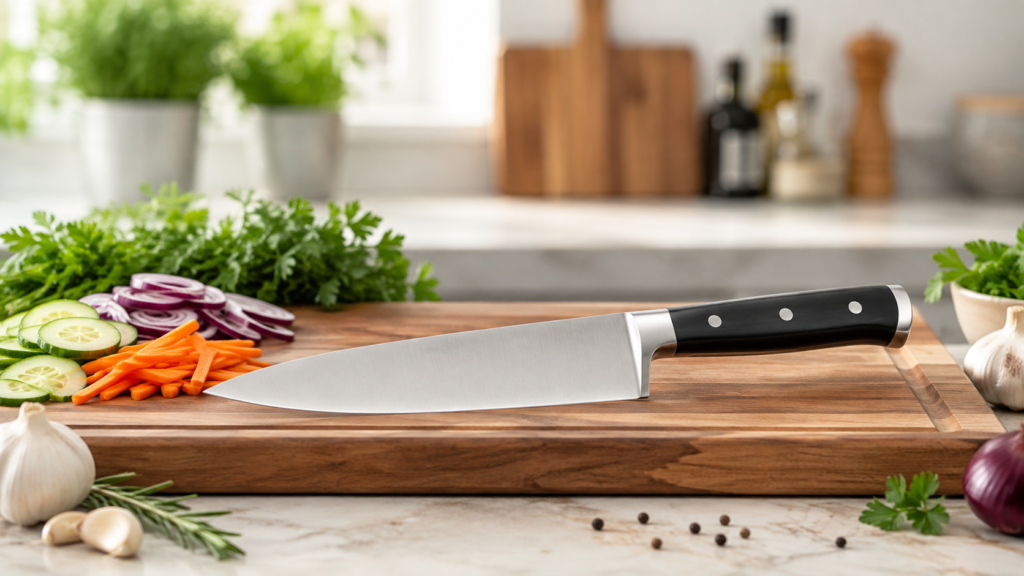
A chef’s knife is a multipurpose kitchen knife with a broad blade that usually tapers toward a pointed tip. Most chef’s knives have blades between 6 and 10 inches long, although an 8-inch knife is a common choice for home kitchens.
The wide blade gives you plenty of space for chopping, while the curved cutting edge allows you to use a rocking motion when cutting herbs and vegetables.
Because it can perform so many different tasks, the chef’s knife is often considered the main workhorse of the kitchen.
What Is a Chef’s Knife Used For?
A chef’s knife can handle a wide range of ingredients and cooking tasks.
Common uses include:
- Chopping onions, carrots, celery, and other vegetables
- Slicing fruits
- Mincing garlic and fresh herbs
- Cutting boneless meat and poultry
- Slicing cooked meat
- Crushing garlic cloves with the flat side of the blade
- Chopping nuts
- Cutting larger vegetables such as cabbage or squash
However, a chef’s knife is not designed for every job. Avoid using it to cut through hard bones, frozen foods, or other extremely hard materials because these can damage the blade.
Parts of a Chef’s Knife
Understanding the basic parts of a chef’s knife can help you use it more comfortably and safely.
Blade
The blade is the main cutting part of the knife. A good blade should be sharp enough to cut food cleanly without requiring excessive pressure.
Tip
The pointed end of the knife is useful for precise cutting and working with smaller ingredients.
Edge
The edge is the sharpened portion of the blade that actually cuts the food.
Heel
The heel is the back portion of the blade near the handle. It is usually stronger than the tip and works well for cutting firmer foods.
Handle
The handle should feel comfortable and secure in your hand. A knife that feels balanced and easy to control is often safer to use.
How to Hold a Chef’s Knife
Holding the knife correctly gives you better control.
One common technique is called the pinch grip.
Place your thumb on one side of the blade near the handle and your index finger on the opposite side. Wrap your remaining three fingers comfortably around the handle.
This grip may feel unusual at first, but it gives you more control over the blade than holding only the handle.
Do not squeeze the knife too tightly. Your grip should be secure but comfortable.
How to Hold Food Safely While Cutting
Your other hand is just as important as the hand holding the knife.
Use what is commonly called a claw grip.
Curl your fingertips slightly inward and use your knuckles as a guide for the side of the knife blade. This helps keep your fingertips away from the cutting edge.
Move slowly while you are learning. Speed comes naturally after you become comfortable with the technique.
How to Use a Chef’s Knife
Different ingredients may require slightly different cutting motions.
Rocking Motion
Keep the tip of the knife close to the cutting board while moving the handle up and down.
This technique works well for:
- Herbs
- Garlic
- Onions
- Many vegetables
Straight Chopping
Lift the blade slightly and move it downward through the food.
This works well for vegetables and ingredients that need clean, even cuts.
Slicing Motion
Move the blade forward or backward while gently cutting through the food instead of pressing directly downward.
This method works well for meat, larger vegetables, and delicate foods.
The knife should do most of the work. If you have to push very hard, the blade may need sharpening.
Always Use a Stable Cutting Board
A stable cutting surface is important whenever you use a chef’s knife.
Place your cutting board on a flat counter. If the board slides, place a damp kitchen towel or non-slip mat underneath it.
Wood and quality plastic cutting boards are popular choices because they are generally easier on knife edges than very hard surfaces.
Avoid cutting directly on:
- Glass
- Stone countertops
- Ceramic plates
- Metal surfaces
These hard surfaces can dull the knife quickly.
How to Choose a Chef’s Knife
You do not necessarily need the most expensive knife. The best chef’s knife is one that feels comfortable and easy for you to control.
Consider these factors when choosing one.
Size
An 8-inch chef’s knife is a versatile size for many home cooks.
A smaller 6-inch knife may feel easier to control if you have smaller hands or prefer a lighter knife.
Weight
Some people prefer a heavy knife, while others prefer something lightweight.
Try to choose a knife that feels balanced rather than too heavy at either the blade or handle.
Handle Comfort
The handle should feel secure without creating uncomfortable pressure in your hand.
Blade Material
Stainless steel blades are popular because they resist rust and are relatively easy to maintain.
Different steels vary in hardness, sharpness, and maintenance requirements, but beginners usually do not need to worry about choosing specialized steel.
How to Keep a Chef’s Knife Sharp
A sharp knife is usually easier and safer to control than a dull one.
A dull blade requires more pressure and may slip off the surface of food.
To keep your knife performing well:
- Use a wood or plastic cutting board
- Avoid cutting frozen foods or bones
- Hone the blade when necessary
- Sharpen the knife when it becomes noticeably dull
- Store it properly
- Wash and dry it after use
Honing helps maintain the alignment of the knife edge, while sharpening removes a small amount of metal to create a new sharp edge.
How to Clean a Chef’s Knife
The safest approach is usually to wash a chef’s knife by hand.
After using it:
- Wash the blade carefully with warm water and mild dish soap.
- Keep the sharp edge facing away from your fingers.
- Rinse thoroughly.
- Dry the knife immediately with a clean towel.
- Store it in a safe place.
Even if a knife is labeled dishwasher-safe, hand washing is often better for protecting both the blade and handle.
Never leave a sharp knife hidden in a sink full of soapy water where someone could accidentally reach into it.
How to Store a Chef’s Knife
Proper storage protects both the knife and anyone using the kitchen.
Good storage options include:
- A knife block
- A magnetic knife strip
- An in-drawer knife organizer
- A protective blade guard
Avoid throwing a chef’s knife loosely into a drawer with other utensils. The blade can become dull or damaged, and someone could accidentally cut their hand while reaching into the drawer.
Common Chef’s Knife Mistakes to Avoid
A few simple habits can help your knife last longer.
Avoid:
- Cutting directly on glass or stone
- Using the knife to open cans or packages
- Cutting bones with a chef’s knife
- Cutting frozen food
- Leaving the knife wet
- Tossing it loosely into a drawer
- Trying to catch a falling knife
If a knife starts to fall, move away and let it fall. Never try to catch it.
Is a Chef’s Knife Good for Beginners?
Yes. A chef’s knife is one of the best knives for beginners because it can handle so many common kitchen tasks.
Instead of buying a large knife set immediately, a beginner can often start with a chef’s knife and add specialized knives later as needed.
The most important things are choosing a knife that feels comfortable, keeping it sharp, and practicing good cutting technique.
FAQ
What size chef’s knife is best for beginners?
An 8-inch chef’s knife is a popular all-purpose choice. However, a 6-inch knife may be more comfortable if you prefer something smaller and lighter.
Can a chef’s knife cut meat?
Yes. A chef’s knife works well for cutting and slicing boneless meat and poultry. It should not be used to cut through large bones.
Can I use a chef’s knife for vegetables?
Yes. Chopping and slicing vegetables is one of the main uses of a chef’s knife.
How often should I sharpen my chef’s knife?
There is no single schedule that works for everyone. Sharpen the knife when you notice that it no longer cuts food cleanly or requires noticeably more pressure.
Should chef’s knives go in the dishwasher?
Hand washing is generally the better choice. Dishwasher heat, moisture, detergent, and contact with other utensils can shorten the life of the blade or handle.
What cutting board is best for a chef’s knife?
Wood and quality plastic cutting boards are both good everyday options. Avoid glass and stone surfaces because they can dull the blade quickly.
Conclusion
A chef’s knife is one of the most versatile and valuable tools in any kitchen. With one good knife, you can prepare vegetables, fruits, herbs, meat, and many other everyday ingredients.
You do not need complicated knife skills to get started. Focus first on a comfortable grip, a stable cutting board, slow and controlled movements, and keeping the blade sharp.
Once you become comfortable using a chef’s knife, everyday food preparation becomes easier and more efficient—and you will have a strong foundation for learning how to use other kitchen knives as well.
Coming Up in Our Kitchen Knife Series
Want to learn more about kitchen knives? Here are the next guides in our Kitchen Knife Series:
- Chef’s Knife vs Santoku Knife: What’s the Difference?
- Types of Kitchen Knives and What They’re Used For
- How to Sharpen a Kitchen Knife at Home
- How to Care for Kitchen Knives and Keep Them Sharp
As each guide is published, you’ll be able to follow the links above to learn more about choosing, using, sharpening, and caring for your kitchen knives.