Latest posts
-
Saucepan vs. Stockpot: What’s the Difference?
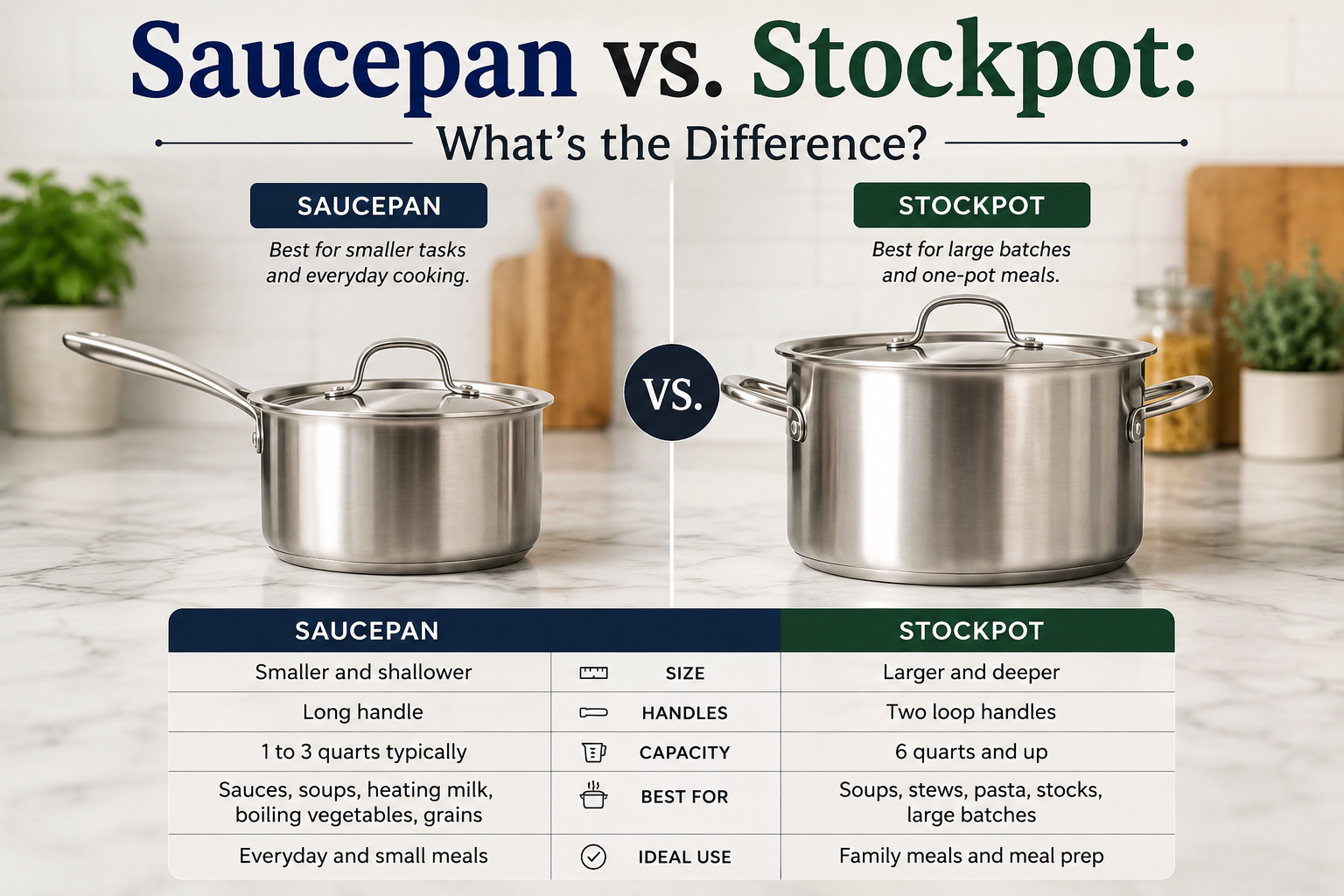
Introduction Saucepans and stockpots are two common pieces of cookware, and at first glance they can look quite similar. Both are deep cooking vessels that can be used for liquids, soups, and many everyday recipes. However, their size, shape, handles, capacity, and best uses are quite different. A saucepan is generally designed for smaller everyday…
-
Dutch Oven: Uses, Types, and How to Choose the Right One
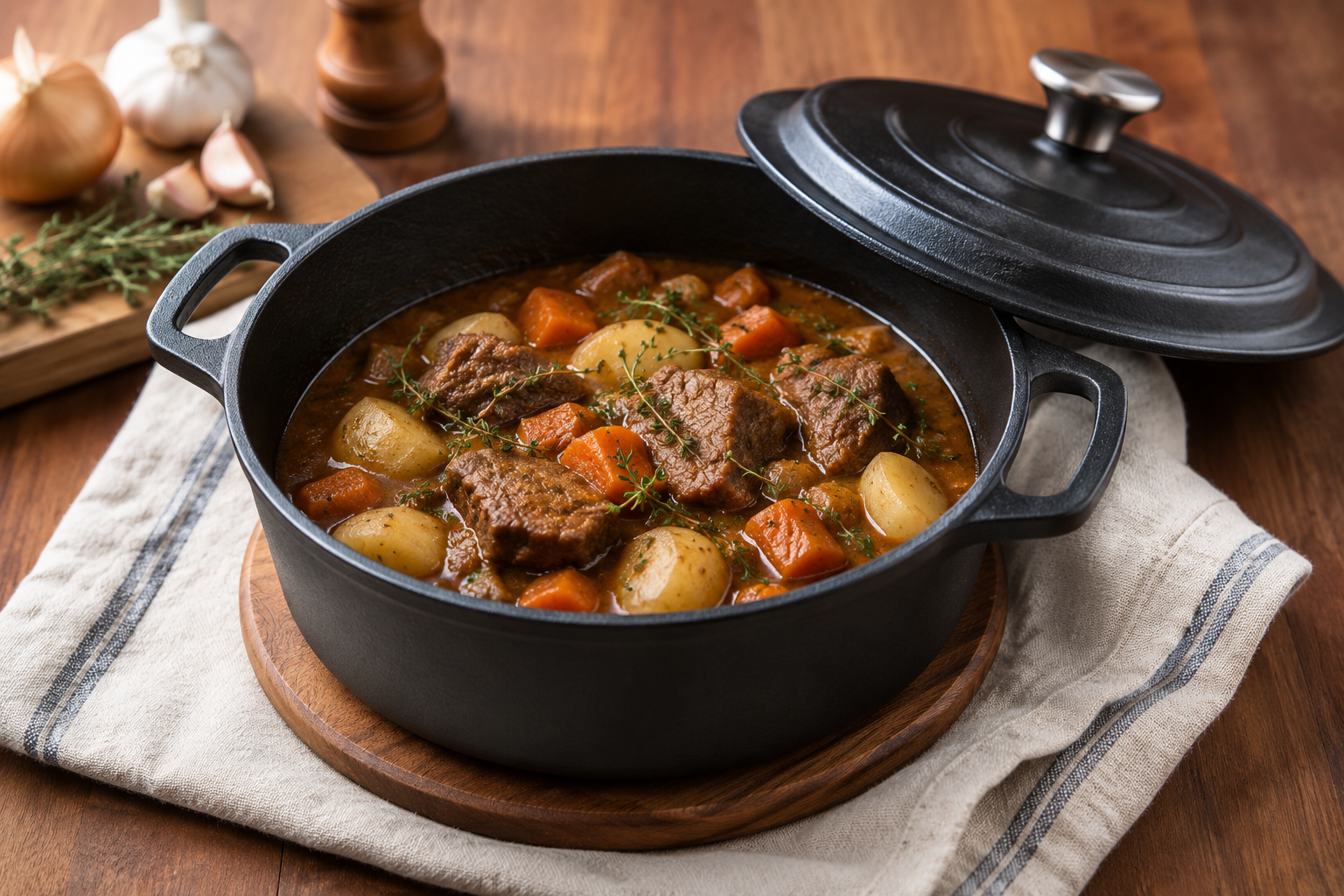
Dutch Oven: Uses, Types, and How to Choose the Right One Introduction A Dutch oven is one of the most versatile pieces of cookware you can have in your kitchen. With its thick walls, heavy lid, and excellent heat retention, it can handle everything from slow-cooked stews and soups to braised meats, freshly baked bread,…
-
Stockpot: Uses, Sizes, and How to Choose the Right One
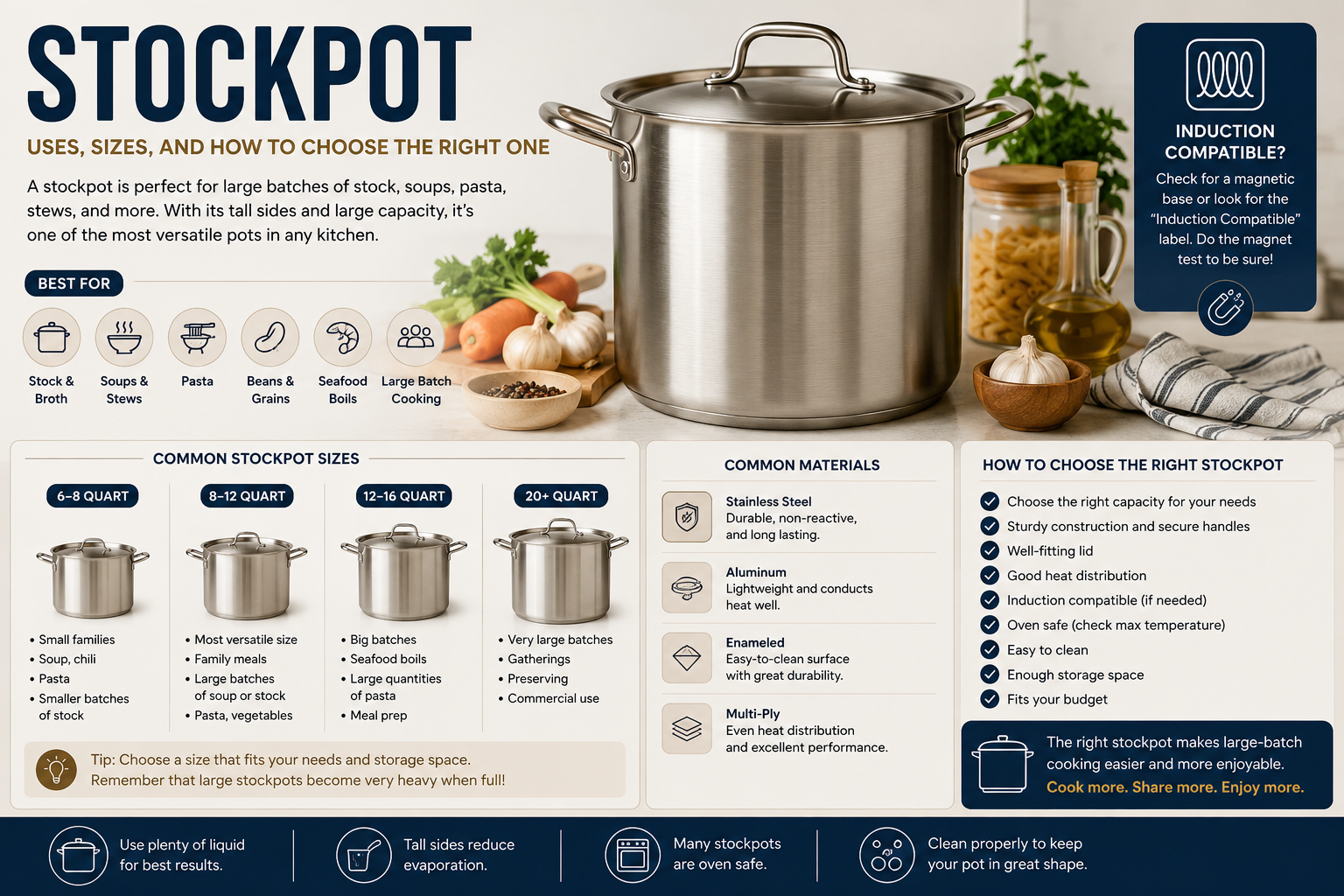
Introduction A stockpot is one of the most useful pieces of cookware for preparing large quantities of food. With its tall sides, large capacity, and two sturdy handles, a stockpot is designed for cooking foods that require plenty of liquid or extra space. It is commonly used for homemade stock, soups, stews, pasta, seafood, and…
-
Saucepan: Types, Uses, and How to Choose the Right One
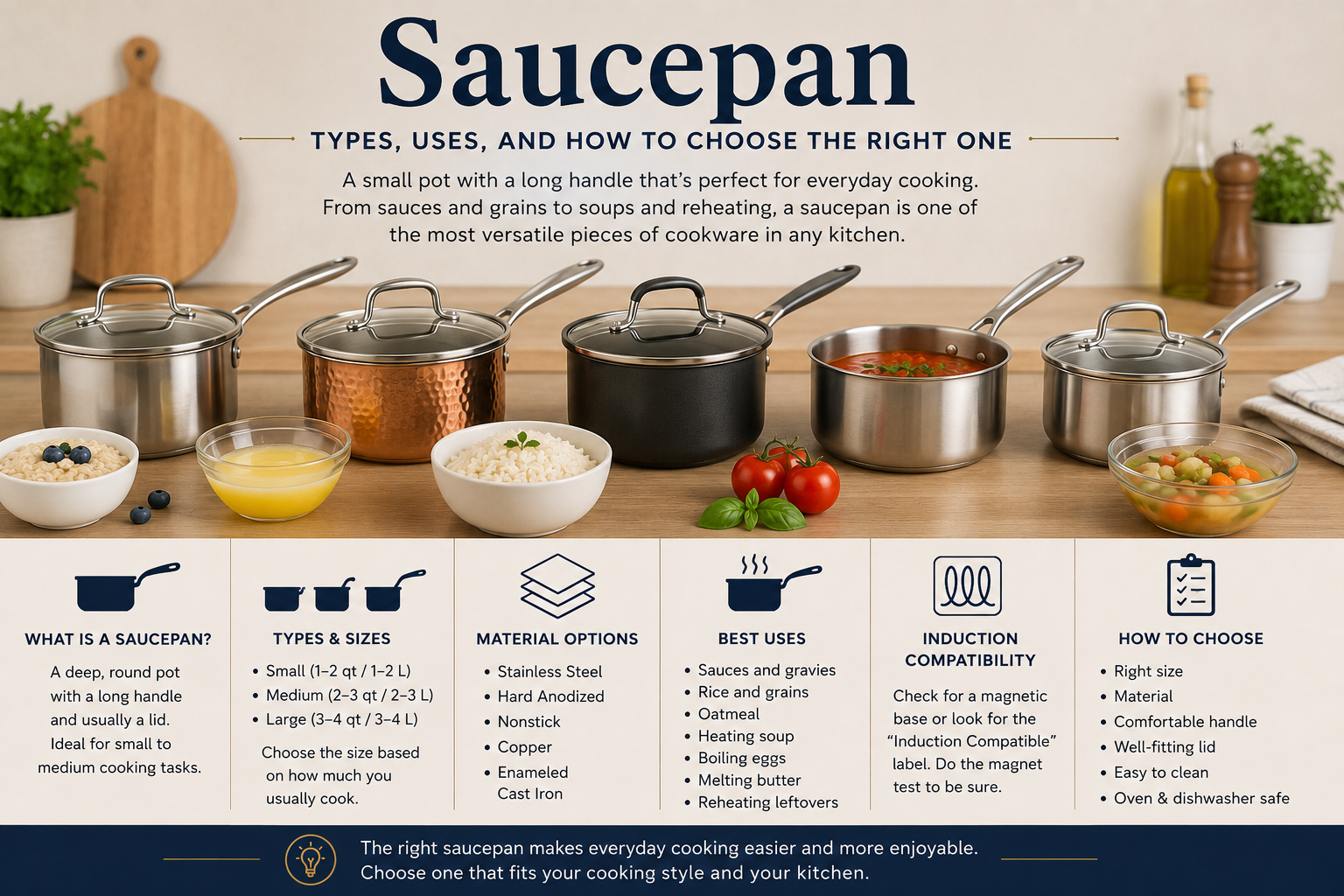
Introduction A saucepan is one of the most useful pieces of cookware in almost any kitchen. With its deep sides, relatively small cooking surface, and long handle, a saucepan is designed for everyday tasks such as making sauces, cooking rice, heating soup, boiling eggs, and reheating leftovers. Saucepans come in different sizes and materials, and…
-
Types of Cooking Pots: A Complete Guide to Choosing the Right Pot
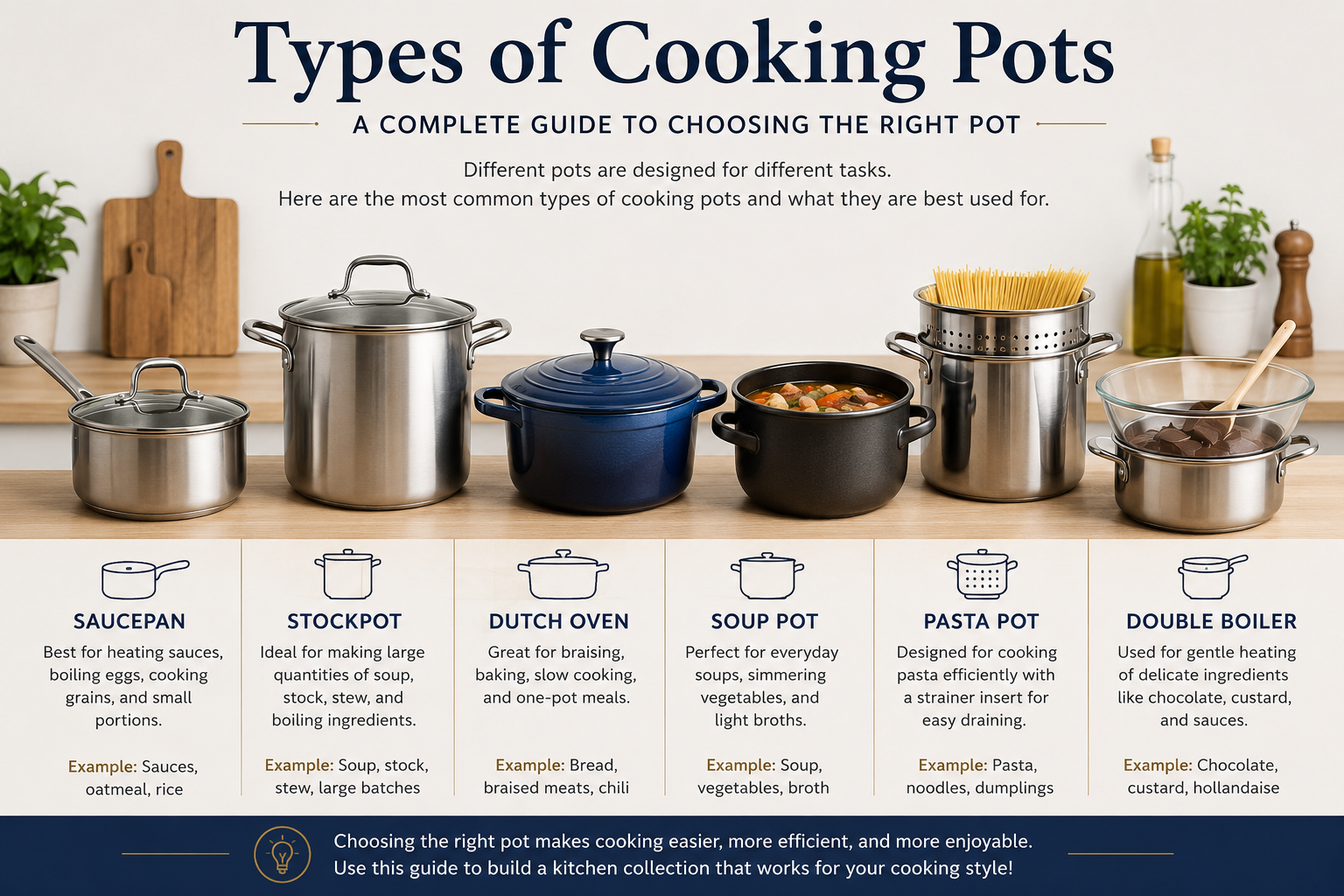
Introduction I have a set of stainless steel pots that I’ve been using for more than 20 years. There are four pots in the set, and honestly, they still don’t feel like “old cookware” to me. I still enjoy using them, and they are some of the kitchen tools I trust most. One reason is…
-
Best Frying Pans for Induction Cooktops: What You Need to Know
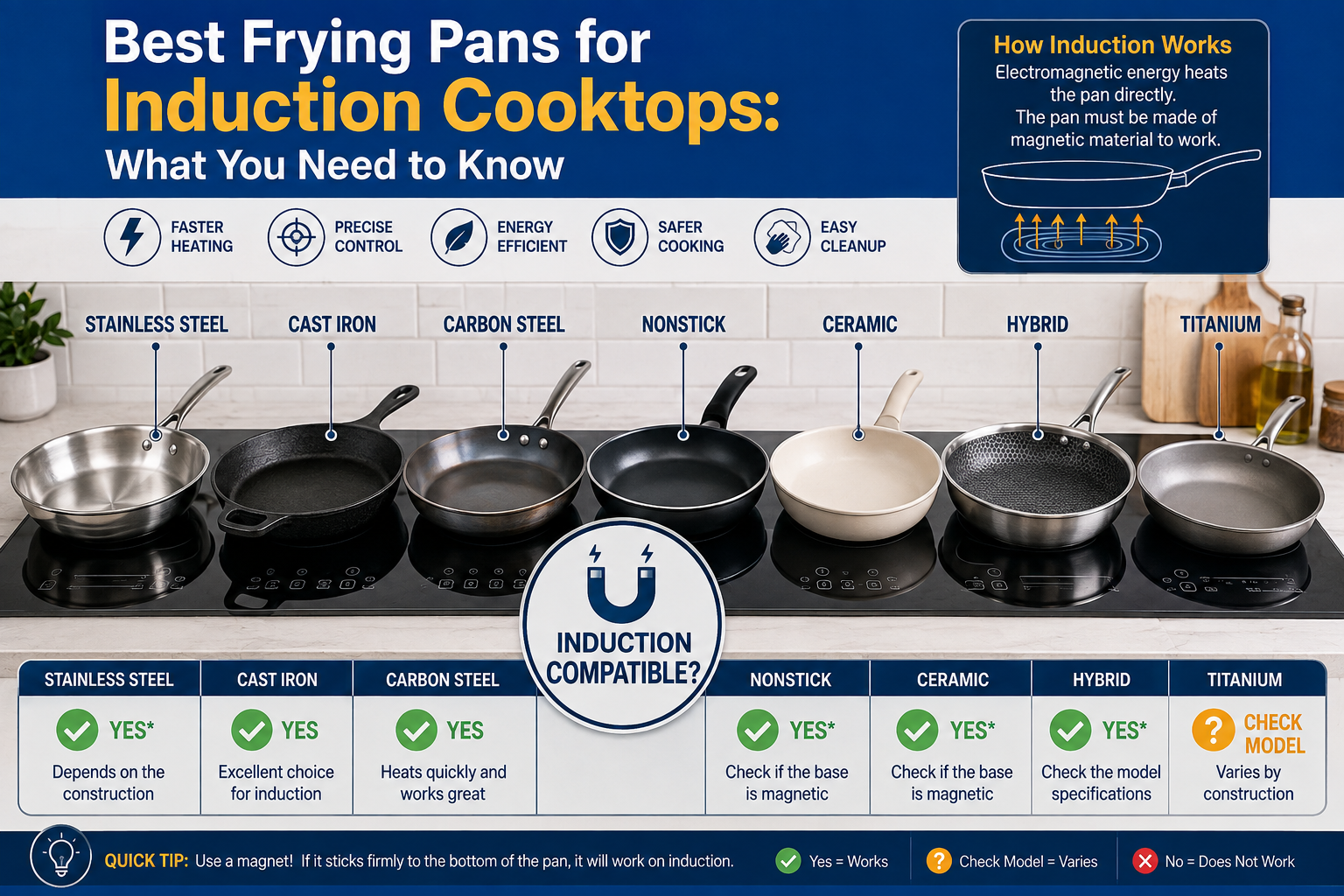
Introduction Induction cooking is fast, responsive, and increasingly popular, but it has one important requirement: not every frying pan will work on an induction cooktop. Unlike conventional gas or electric cooking, induction uses electromagnetic energy to heat compatible cookware directly. For this to work, the bottom of the frying pan must contain a magnetically responsive…
-
Titanium Frying Pan: Pros, Cons, and Is It Worth It?
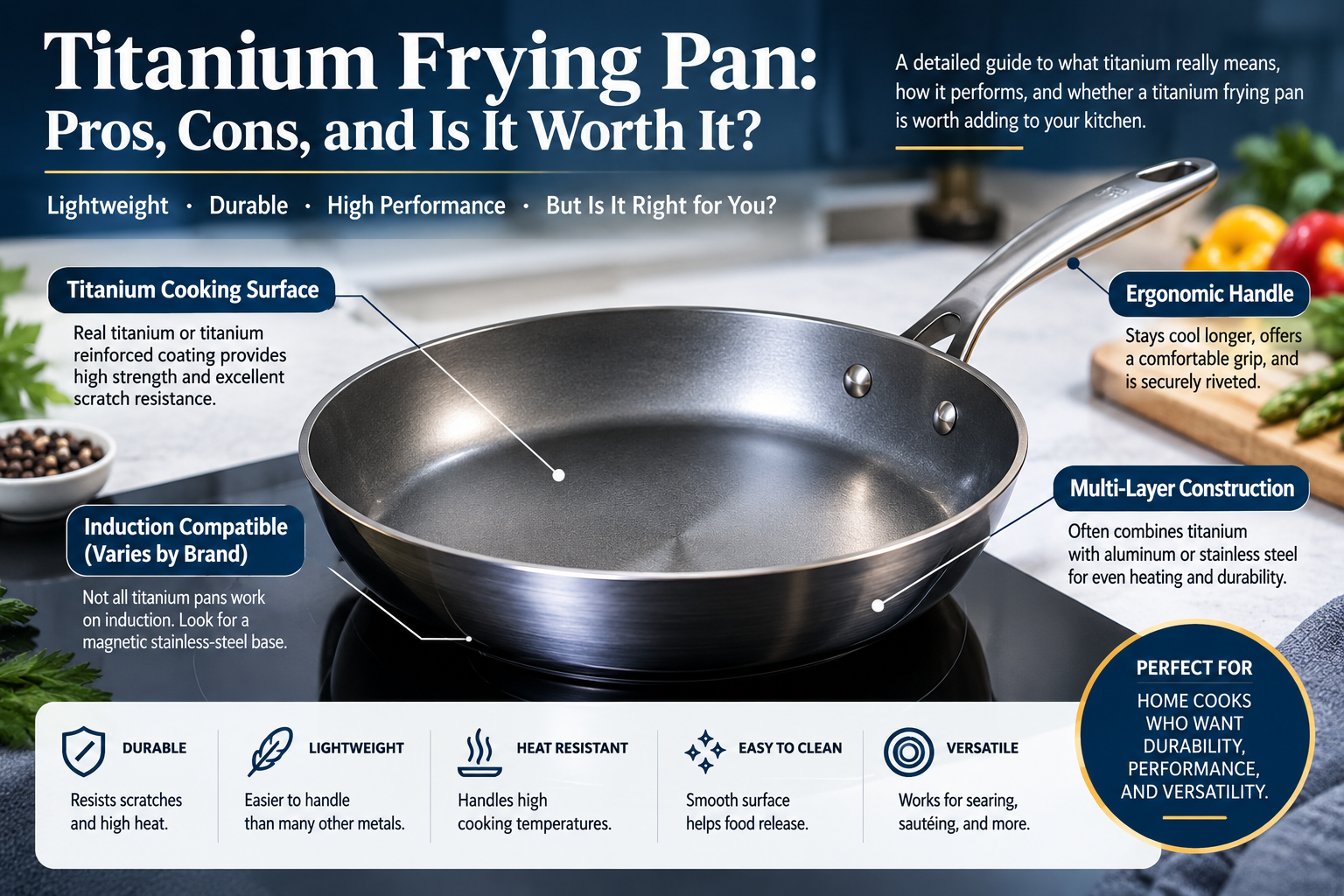
Introduction Titanium frying pans are attracting attention from home cooks looking for durable, high-performance alternatives to traditional cookware. However, the term “titanium frying pan” can be confusing. It does not always mean that the entire pan is made from solid titanium. Depending on the manufacturer, titanium may be used as the cooking surface, as part…
-
Hybrid Frying Pan: Pros, Cons, and Is It Worth It?
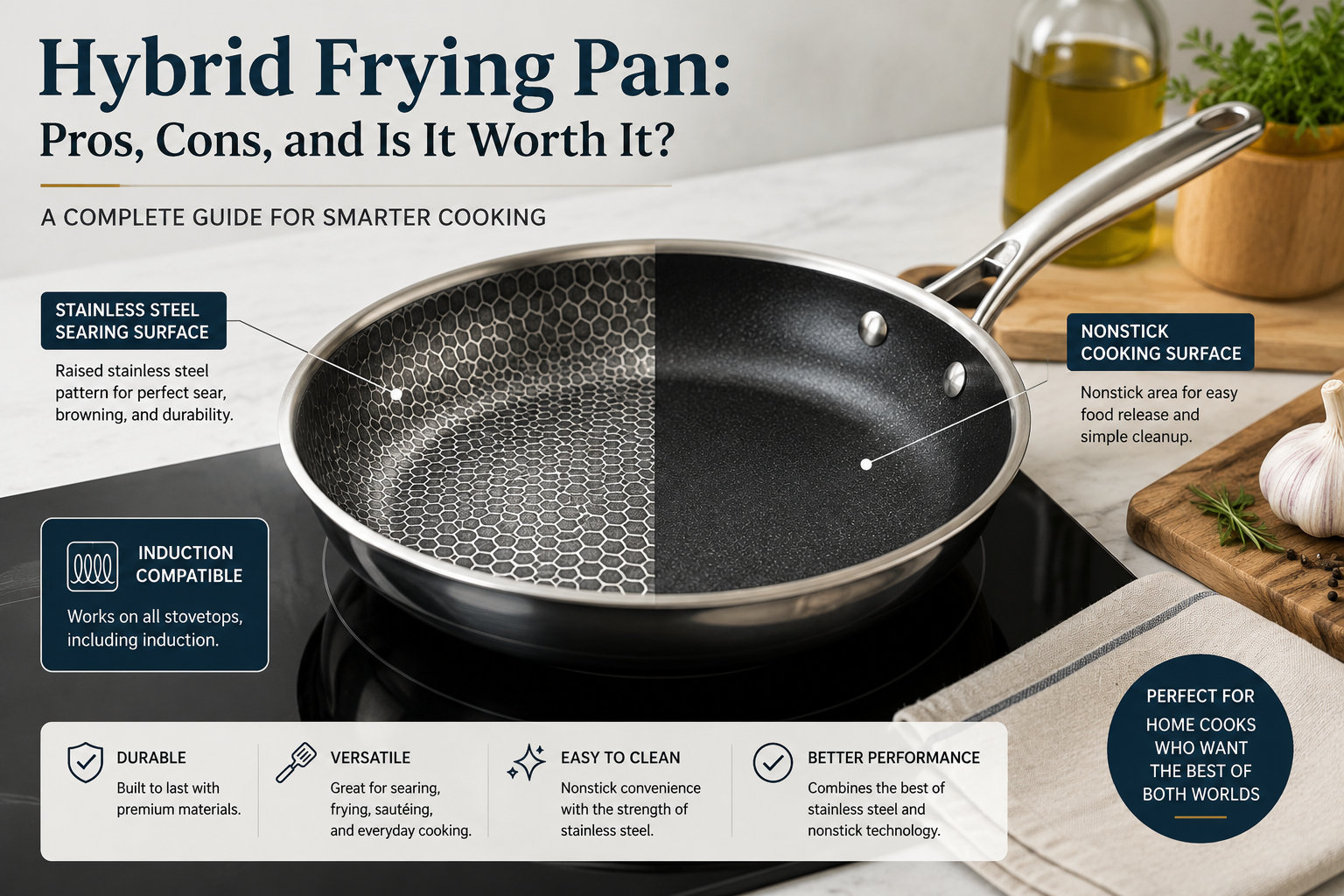
Introduction Hybrid frying pans have become an increasingly visible option for home cooks who want some of the benefits of stainless steel and nonstick cookware in a single pan. Unlike a conventional nonstick pan with one continuous coated cooking surface, some hybrid pans use raised stainless-steel areas together with recessed nonstick areas. The exact construction…
-
How to Choose a Frying Pan: A Complete Buying Guide
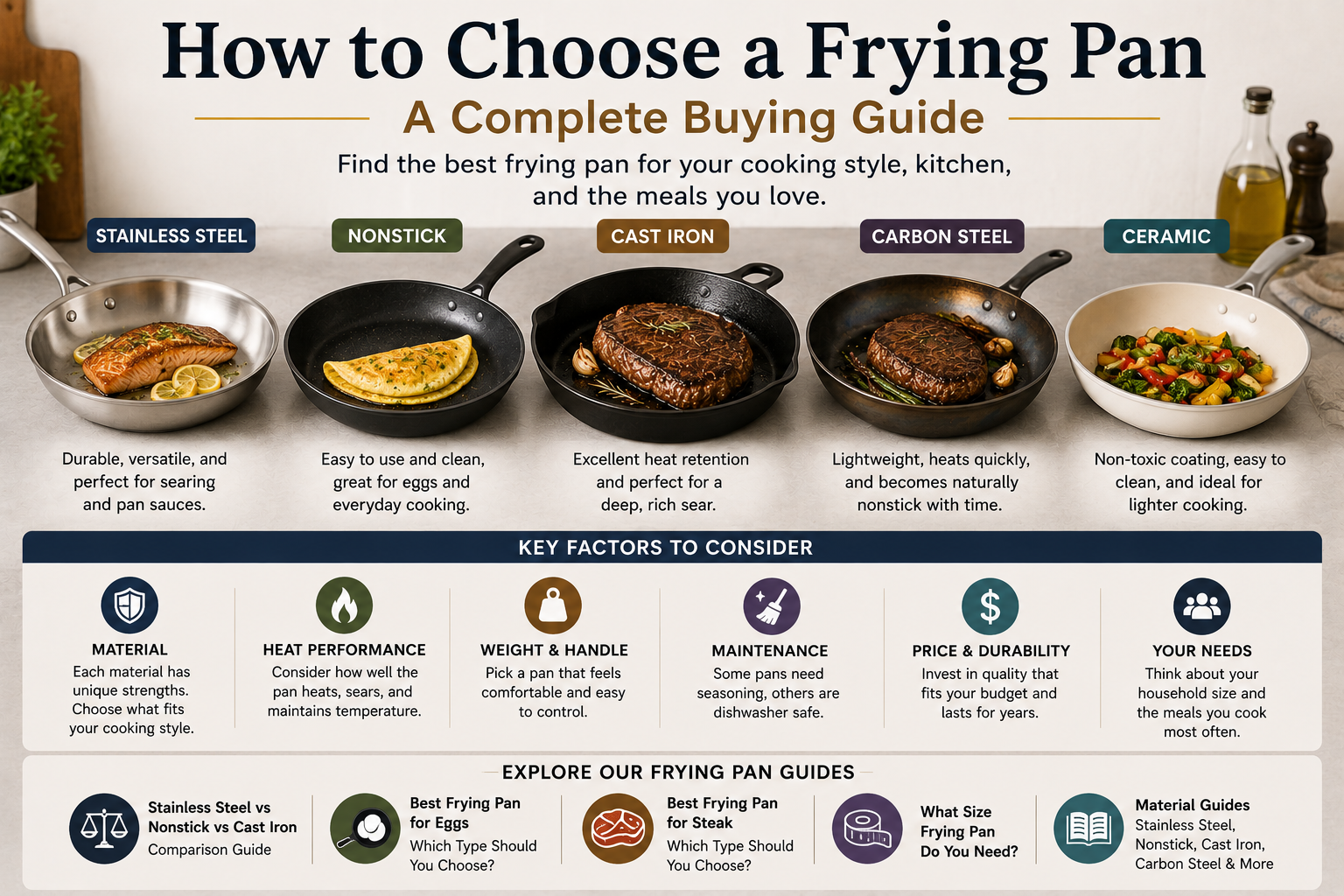
Introduction I feel like I’ve tried almost every major type of frying pan at some point. For many years, I mostly used nonstick pans. Then I started wondering whether there might be a better long-term choice. I tried cast iron because I liked the idea of owning a pan without a coating that could wear…
-
What Size Frying Pan Do You Need? A Simple Guide
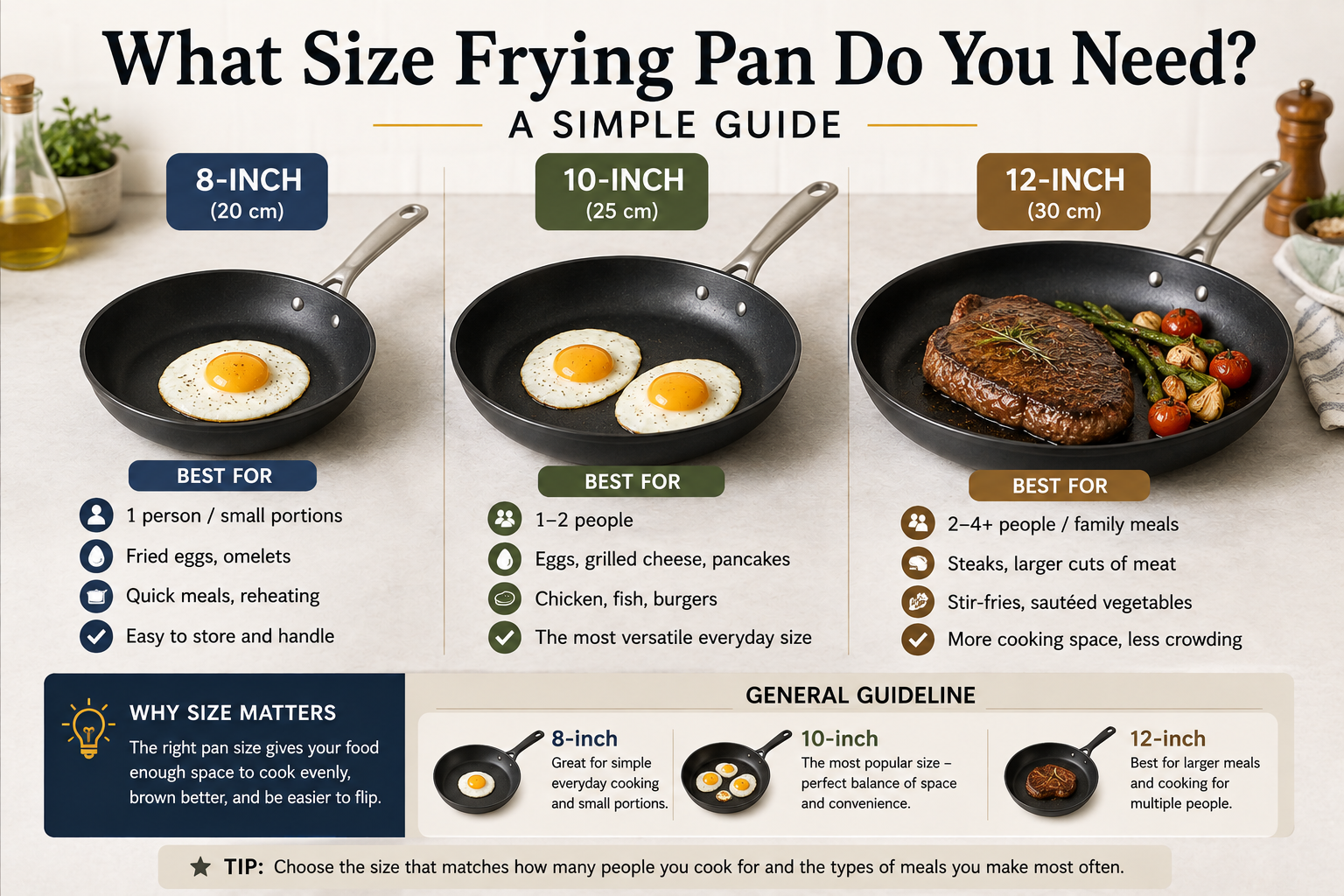
Introduction Choosing the right frying pan size can make everyday cooking much easier. A pan that is too small can crowd your food and make browning difficult, while a pan that is larger than you need may be heavier and less convenient to handle. The most common frying pan sizes are around 8, 10, and…